Imagine standing in a sunny village square in spring. Church bells echo across white houses, long tables are filled with delicious dishes, and families gather together after weeks of fasting. You smell roasted lamb, warm bread, and herbs floating through the air. At that moment you may wonder what food is eaten on Greek Easter and why these dishes carry such deep meaning.
Greek Easter is not just a religious celebration. It is a powerful cultural experience that blends faith, history, family, and food. For many people in Greece and Greek communities worldwide, the holiday represents renewal, joy, and the return of abundance after a period of restraint.
If you are a holiday enthusiast, a cultural explorer, or someone who simply loves festive food traditions, this guide will help you understand what food is eaten on Greek Easter. You will also learn why each dish matters, how traditions developed over centuries, and how you can experience these customs yourself.
Throughout this article, you will see that Greek Easter food is not random. Each dish acts like a chapter in a story. When you place them together on a table, they tell a powerful narrative about sacrifice, celebration, and community.
Understanding Cultural Traditions In Greek Easter Celebrations
Before exploring the food itself, it helps to understand the idea of cultural traditions. A cultural tradition is like a family recipe that has been passed down for generations. Just as your grandmother may cook a dish exactly the same way every year, societies also repeat meaningful actions to remember their history and values.
During Greek Easter, these traditions create a shared identity. They help people feel connected not only to their families but also to centuries of ancestors who celebrated the same holiday in similar ways.
One historian from Athens once explained Greek Easter traditions with a simple metaphor. He said traditions are like bridges built across time. Every generation walks across the same bridge, carrying memories from the past into the future.
Food plays an important role in this bridge. When you learn what food is eaten on Greek Easter, you are not just learning recipes. You are discovering symbols that represent faith, rebirth, and community.

The Historical Significance Of Greek Easter Foods
Greek Easter is the most important religious holiday in the Greek Orthodox calendar. It celebrates the resurrection of Jesus Christ, which symbolizes victory of life over death and hope over despair.
For centuries, Greek families have prepared specific foods that reflect this message of renewal. Many of these dishes developed during times when people depended heavily on seasonal ingredients.
For example, lamb became central to the holiday because spring was the season when young lambs were available. Over time, the roasted lamb became a powerful symbol of celebration and sacrifice.
A food historian once shared a story about a small village in northern Greece. During difficult years of war and poverty, villagers would still find a way to share lamb on Easter Sunday. Even when resources were limited, the community believed that the tradition must continue because it represented hope and unity.
This story shows how deeply food is connected to meaning in Greek Easter celebrations.
The Long Fast Before The Feast
To understand what food is eaten on Greek Easter, you must first understand the period that comes before the celebration. Greek Orthodox Christians observe a fasting period called Lent, which lasts about forty days.
During this time many people avoid meat, dairy, and rich foods. The fasting period is meant to help people reflect spiritually and practice discipline.
You can think of Lent like a quiet winter before a vibrant spring. When the fast ends, the return of festive food feels even more joyful and meaningful.
Because of this long period of restraint, Easter meals are designed to be especially rich and celebratory.
Midnight Celebration And The First Meal
The Easter celebration officially begins late on Saturday night. Families gather at church for a midnight service that celebrates the resurrection.
At midnight the church becomes bright with candlelight. People greet each other with words that mean “Christ has risen.” The moment is emotional and powerful.
After the service, families return home to eat their first Easter meal. This meal is usually lighter than the Sunday feast but still deeply symbolic.
The most famous dish served at this moment is a traditional soup called magiritsa.
Magiritsa Soup Breaking The Fast
Magiritsa soup is often the first food eaten after the fasting period. It is made with lamb organs, herbs, and a bright lemon sauce.
For beginners the idea of this soup might sound unusual, but its purpose is very practical. After weeks of lighter food, magiritsa gently prepares the body for richer meals.
Think of it like warming up before a big race. Your body adjusts slowly before the main celebration begins.
Festival organizer Dimitris Karas once described the moment when families sit down for magiritsa after midnight. He said the soup tastes like victory because it marks the end of patience and the beginning of joy.
Red Eggs A Powerful Easter Symbol
Another famous answer to the question what food is eaten on Greek Easter is red dyed eggs.
These eggs are boiled and colored a deep red. The color symbolizes the blood of Christ, while the egg itself represents new life.
During the celebration families play a traditional game called egg tapping. Two people tap their eggs together, and the person whose egg remains unbroken is believed to have good luck.
A participant at a cultural festival once laughed while explaining the game. He said the egg competition becomes serious business in many families. Children often study the shape of their eggs carefully, hoping to choose the strongest one.
Tsoureki The Sweet Easter Bread
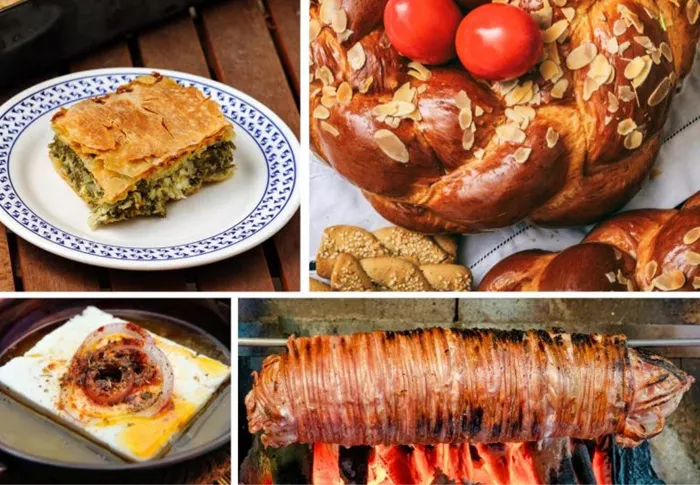
One of the most beloved Easter foods is tsoureki, a sweet braided bread.
This bread has a soft texture and a rich aroma. It is usually flavored with unique spices like mahleb and mastic, which give it a warm and slightly floral taste.
Red eggs are often placed on top of the bread before baking. This decoration transforms the loaf into a beautiful centerpiece.
You can imagine tsoureki as the crown jewel of the Easter table. It represents joy, sweetness, and abundance.
Roasted Lamb The Heart Of The Easter Feast
If someone asks you what food is eaten on Greek Easter, roasted lamb is almost always the first answer.
On Easter Sunday families gather outdoors to cook lamb slowly over an open fire. The cooking process can take several hours and often becomes a social event.
Neighbors talk, children play, and music fills the air while the lamb rotates slowly above glowing coals.
A village chef once said roasting lamb is like conducting an orchestra. The fire, the seasoning, and the timing must work together perfectly.
When the lamb is finally ready, it becomes the centerpiece of a huge family meal.
Festive Side Dishes That Complete The Table
Although lamb is the star of the feast, many other dishes appear on the table as well.
Roasted potatoes seasoned with lemon and oregano are common. Fresh salads with tomatoes, cucumbers, and olive oil bring brightness to the meal.
Cheese pies, stuffed grape leaves, and savory pastries often appear alongside the main dishes.
These foods balance the richness of the lamb and create a table full of colors and flavors.
Festive Drinks And Sweet Desserts
No celebration would be complete without drinks and desserts.
Greek Easter meals often include wine, herbal drinks, and refreshing beverages.
Desserts such as honey pastries, nut filled sweets, and syrup soaked cakes add another layer of joy to the celebration.
These treats symbolize sweetness in life and the happiness of gathering with loved ones.
Celebration Practices Around The Easter Table
Celebration practices refer to the rituals people follow during a holiday. In Greek Easter these practices create a warm atmosphere of unity.
Families often begin the meal with blessings or traditional greetings. People share stories, laugh together, and enjoy long conversations.
You might notice that the meal is not rushed. Instead, it stretches across hours, allowing everyone to fully enjoy the moment.
Holiday Wellness Strategies During Festive Meals
With so much delicious food, it is helpful to think about wellness strategies.
Holiday wellness strategies are simple habits that help you enjoy celebrations while keeping your body balanced.
For example, pacing your meal is like pacing yourself during a long hike. If you eat slowly, you can enjoy every flavor without feeling overwhelmed.
Drinking water, taking breaks between courses, and sharing dishes with others are also helpful strategies.
Many Greek families naturally practice these habits because their meals unfold gradually over several hours.
How You Can Experience Greek Easter Traditions
You do not have to live in Greece to explore these traditions.
You can start by preparing simple dishes such as red eggs or sweet bread. Invite friends or family to share the meal and explain the symbolism behind each dish.
You may also attend cultural festivals organized by Greek communities in many countries. These events often recreate the joyful atmosphere of Easter celebrations.
One festival organizer once said that sharing Easter food with newcomers is one of the best ways to keep traditions alive.
Why Greek Easter Food Traditions Continue To Inspire
The reason people remain fascinated with what food is eaten on Greek Easter is simple. These foods tell a powerful story.
Each dish represents history, faith, and the joy of togetherness. When families gather around the Easter table, they are not just eating a meal. They are continuing a tradition that connects generations.
Conclusion
Understanding what food is eaten on Greek Easter opens a window into one of the most meaningful cultural celebrations in the world. From magiritsa soup at midnight to roasted lamb on Easter Sunday, each dish carries a story of renewal and community. Red eggs symbolize new life, tsoureki bread represents sweetness and celebration, and shared meals strengthen family bonds. If you explore these traditions yourself, you will discover that Greek Easter is more than a holiday meal. It is a vibrant cultural experience that brings people together through history, flavor, and joyful celebration.
FAQ
Why Is Lamb Traditionally Eaten On Greek Easter
Lamb is eaten because it symbolizes sacrifice and renewal in Christian tradition. Historically, lamb was also widely available in spring, making it a practical and symbolic centerpiece for the Easter feast.
What Is The Meaning Of Red Eggs During Greek Easter
Red eggs represent the blood of Christ and the promise of new life. The egg itself symbolizes rebirth, and the egg tapping game adds a fun and symbolic activity to the celebration.
What Is Tsoureki And Why Is It Important
Tsoureki is a sweet braided bread flavored with special spices. It is important because it represents joy, prosperity, and celebration during the Easter holiday.
What Food Is Eaten On Greek Easter After The Midnight Church Service
After the midnight service, families usually eat magiritsa soup along with red eggs and bread. This meal gently breaks the long fasting period before the larger Sunday feast.
Can You Celebrate Greek Easter Food Traditions Outside Greece
Yes, many people around the world celebrate Greek Easter traditions. You can prepare traditional dishes, attend cultural festivals, or share a festive meal with friends and family to experience the spirit of the holiday.
Related topics: