
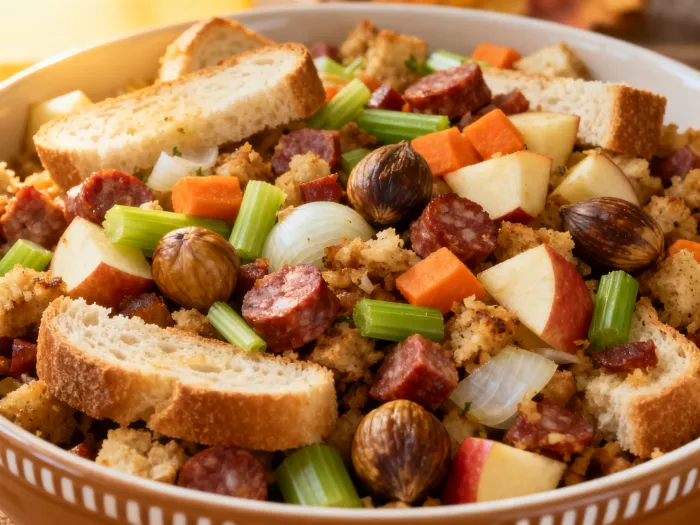
As a festivalologist, I am often asked about the mysteries behind holiday foods. When it comes to Thanksgiving, the stuffing steals the show—sometimes even more than the turkey itself. But what exactly is stuffing made of? Let’s take a humorous yet informative journey into the heart of this beloved dish.
A Brief History of Stuffing
Stuffing has been around for centuries. Ancient Romans stuffed animals with vegetables, herbs, and grains. In America, stuffing became a Thanksgiving staple during the 19th century. Back then, families used whatever was available: bread, nuts, onions, and even oysters! Today, stuffing recipes are as diverse as the families who gather to enjoy them.
Bread: The Foundation
At its core, stuffing is all about bread. The bread can be white, whole wheat, cornbread, or even sourdough. It is usually dried or toasted to absorb all those wonderful flavors. Without bread cubes, stuffing would just be a soggy pile of veggies.
Vegetables: The Crunch Factor
Stuffing loves vegetables. The most common are onions and celery. These two add flavor and a satisfying crunch. Some people get adventurous and add carrots, mushrooms, or leeks. But beware—if you add too many veggies, you might end up with a salad instead of stuffing!
Herbs & Spices: The Secret Ingredients
Sage is the superstar herb in most stuffing recipes. Thyme and parsley often join the party. Some cooks add rosemary for extra flair. Salt and pepper are essential, but don’t forget a pinch of nutmeg for warmth and mystery.
Liquids: The Moist Maker
Dry stuffing is nobody’s friend. That’s why cooks add broth—usually chicken or vegetable—to moisten the bread. Some traditionalists swear by turkey drippings for extra flavor. Others use melted butter or even a splash of wine (for those who want their stuffing to feel fancy).
Meat & Extras: For Those Who Like Surprises
Some stuffings include sausage for a hearty twist. Others feature chopped apples or dried cranberries for sweetness. Nuts like pecans or walnuts give crunch and richness. And yes—oysters are still a thing in some parts of the country!
Eggs: Holding It All Together
Not every recipe uses eggs, but when they do, eggs act as glue to hold everything together. This makes for a firmer stuffing that won’t fall apart when you serve it.
How Is Stuffing Cooked?
Stuffing can be cooked inside the turkey (which technically makes it “dressing”), or baked separately in a dish. Oven-baked stuffing gets crispy on top—a bonus for texture lovers.
Regional Variations: A United States of Stuffing
Each region has its own twist:
- Southern States: Cornbread stuffing with plenty of butter.
- New England: Oyster stuffing for seafood lovers.
- Midwest: Sausage and apple are popular additions.
- West Coast: Vegetarian versions with wild rice and mushrooms.
No matter where you go, everyone claims their grandma’s recipe is best!
Why Do We Love Stuffing So Much?
Stuffing brings together simple ingredients in magical ways. It absorbs flavors from the turkey (if cooked inside), warms up cold autumn nights, and offers endless possibilities for customization. It’s comfort food at its finest—and it’s guaranteed to spark debates at every Thanksgiving table.
Conclusion: More Than Just Bread and Herbs
Thanksgiving stuffing is much more than meets the eye—or taste buds! With its mix of bread, vegetables, herbs, spices, broth, and possible surprises like sausage or cranberries, it reflects America’s love for tradition and creativity alike. Next time you scoop a serving onto your plate, remember: You’re enjoying centuries of history wrapped in delicious simplicity.
Related topics: