
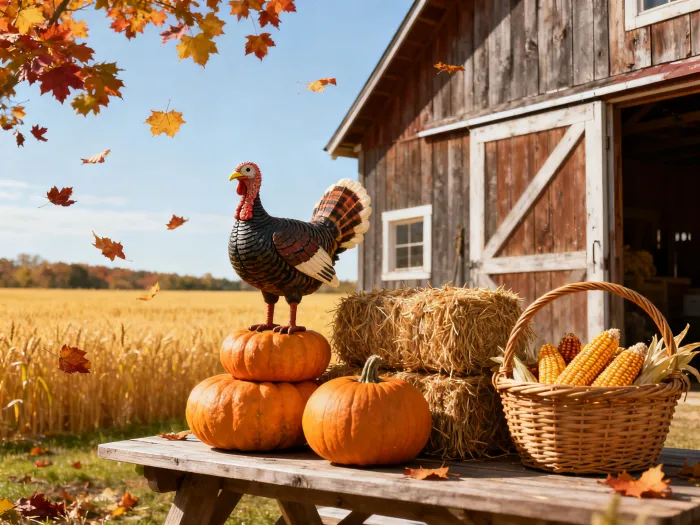
Thanksgiving Day is one of the most widely celebrated holidays in the United States and Canada. It is recognized for its traditions of gathering with family and friends, sharing a meal that typically features turkey, and expressing gratitude for the year’s blessings. The holiday is marked by parades, football games, and a sense of national unity. However, there is ongoing debate about whether Thanksgiving Day has pagan origins or if it is solely a product of Christian or secular traditions. This article aims to explore this question in detail, examining historical records, cultural developments, and scholarly interpretations to provide a clear understanding of Thanksgiving’s roots.
The term “pagan” is often used to describe ancient religious practices that predate Christianity or exist outside of Abrahamic faiths. Pagan holidays typically involve rituals connected to nature, seasonal changes, or polytheistic beliefs. When considering Thanksgiving Day’s origins, it is important to clarify what constitutes a pagan holiday and whether any elements of Thanksgiving align with these characteristics. By analyzing primary sources, historical accounts, and contemporary perspectives, we can assess whether Thanksgiving Day should be classified as a pagan holiday.
Thanksgiving has evolved significantly since its inception. Its modern form reflects influences from various cultural groups, religious traditions, and historical events. The earliest celebrations associated with thanksgiving in North America were marked by expressions of gratitude for successful harvests and survival in a new land. Over time, these celebrations became institutionalized through government proclamations and cultural customs. Understanding this evolution is crucial for determining whether Thanksgiving’s origins are truly pagan or if they stem from other sources.
This article will proceed by first providing an overview of the concept of pagan holidays and their defining features. Next, it will trace the historical development of Thanksgiving Day in North America, examining early colonial practices and subsequent transformations. The analysis will then compare Thanksgiving to known pagan festivals to identify any similarities or differences. Finally, the article will consider contemporary perspectives on Thanksgiving’s meaning and its place in modern society.
Understanding Pagan Holidays: Characteristics and Historical Context
Pagan holidays are rooted in ancient traditions that often revolve around nature worship, seasonal cycles, and polytheistic beliefs. These holidays were celebrated by various cultures before the rise of Christianity and include festivals such as the Roman Saturnalia, Celtic Samhain (which influenced Halloween), Germanic Yule (related to Christmas), and many harvest festivals across Europe and Asia. Pagan celebrations typically feature rituals that honor deities associated with fertility, agriculture, or the sun and moon.
One defining characteristic of pagan holidays is their connection to agricultural cycles. Ancient societies depended on successful harvests for survival, so they developed rituals to appease gods believed to control the earth’s fertility. Harvest festivals were common among pagans; they involved communal feasting, offerings to deities or spirits, music, dance, and symbolic acts meant to ensure future prosperity.
Another feature of pagan holidays is their alignment with natural phenomena such as solstices, equinoxes, and lunar phases. For example:
- Winter Solstice: Celebrated as Yule by Germanic peoples; marked the longest night and return of light.
- Spring Equinox: Associated with renewal and fertility; celebrated as Ostara by some pagans.
- Harvest Festivals: Occurred in late summer or autumn; included Lammas (Lughnasadh) among Celts.
These celebrations often involved rituals designed to synchronize human activities with cosmic events.
Pagan holidays also emphasized communal participation. Entire villages would gather for feasts that reinforced social bonds and expressed collective gratitude. Offerings were made not only to gods but also to ancestors and spirits believed to influence daily life. Music, storytelling, and symbolic acts—such as lighting fires or decorating altars—were integral components.
With the spread of Christianity across Europe and beyond, many pagan holidays were either suppressed or incorporated into Christian calendars through adaptation or reinterpretation. For instance:
- Christmas absorbed elements from Yule (decorating trees).
- Easter took symbols from spring fertility festivals (eggs).
- All Saints’ Day coincided with Samhain (Halloween traditions).
This process blurred distinctions between pagan and Christian customs in some cases.
In summary, pagan holidays are characterized by nature-centric rituals, agricultural themes, communal gatherings, worship of multiple deities or spirits, and alignment with seasonal changes. When considering whether Thanksgiving fits this model, it is necessary to examine both its historical context and its ritualistic elements.
The Historical Development of Thanksgiving Day in North America
The commonly accepted origin story of American Thanksgiving centers on a three-day feast held in 1621 at Plymouth Colony in present-day Massachusetts. According to accounts from settlers such as Edward Winslow and William Bradford—leaders among the Pilgrims—the event was organized after a successful harvest following a difficult first year in the New World. The feast was attended by approximately 50 English colonists (Pilgrims) and over 90 Wampanoag Native Americans who had helped them survive.
The early Pilgrims were religious separatists who had fled persecution in England seeking freedom to practice their faith. Their worldview was shaped by Christian beliefs rather than pagan traditions; they saw themselves as enacting biblical models such as the Israelites’ thanksgiving offerings described in the Old Testament.
Primary sources indicate that the first “Thanksgiving” was not an annual event but rather an impromptu celebration prompted by immediate circumstances—the successful harvest ensured survival through winter. It involved communal feasting on locally available foods: wildfowl (including turkey), venison provided by Native Americans, cornmeal dishes, shellfish, fruits like berries and pumpkins.
Similar harvest celebrations occurred elsewhere in colonial America prior to 1621:
- In Virginia (1619), settlers at Berkeley Hundred held a “day of thanksgiving” upon arrival.
- Spanish explorers held thanksgiving masses in Florida decades earlier.
However, none of these events established an enduring tradition until later government proclamations formalized Thanksgiving as an annual holiday.
During the colonial period through the 18th century, thanksgiving observances varied widely across regions:
- New England: Communities declared days of prayerful thanks after military victories or good harvests.
- Southern Colonies: Celebrations were less frequent but sometimes included communal meals following bountiful seasons.
These events were typically religious in tone—focused on prayer rather than ritualistic acts associated with paganism.
Thanksgiving became more institutionalized during the Civil War era when President Abraham Lincoln proclaimed a national day of thanksgiving in 1863 at the urging of writer Sarah Josepha Hale. Lincoln’s proclamation explicitly framed Thanksgiving as an occasion for Americans to give thanks “to God” for blessings amid national turmoil.
Over time, Thanksgiving adopted additional customs—such as parades (e.g., Macy’s Parade), sporting events (football games), charitable activities (food drives)—that reflect secularization but do not derive from pagan ritualism.
Canadian Thanksgiving has similar roots but developed independently:
- Early European explorers held thanksgivings for safe passage (e.g., Martin Frobisher in 1578).
- The holiday was later tied to harvest celebrations before being fixed on the second Monday in October.
In both countries, Thanksgiving gradually became a symbol of national identity rather than religious observance.
Comparing Thanksgiving Day to Known Pagan Festivals: Similarities and Differences
To determine if Thanksgiving is a pagan holiday, it is useful to compare its features with those found in established pagan festivals—particularly harvest celebrations like Lammas (Lughnasadh), Mabon (Autumn Equinox), or Roman Cerelia.
Similarities:
- Timing: Both Thanksgiving and many pagan harvest festivals occur during autumn after crops have been gathered—reflecting agricultural cycles fundamental to both traditions.
- Feasting: Communal meals are central; people gather to eat foods associated with local harvests (cornbread at Thanksgiving vs grain-based dishes at Lammas).
- Gratitude: Expressions of thanks for abundance are common—pagans offer gratitude to nature deities while modern celebrants thank God or express secular appreciation for family/community.
- Social Cohesion: Both serve as opportunities for strengthening social bonds through shared rituals (dancing at Lammas; family reunions at Thanksgiving).
- Symbolism: Some symbols overlap: cornucopia (“horn of plenty”) appears at both; autumnal decorations such as pumpkins/gourds echo nature’s bounty celebrated by pagans.
Differences:
- Religious Context: Pagan festivals involve worship or offerings to specific gods/goddesses (Ceres for Romans; Lugh for Celts). Early Thanksgivings focused on prayerful thanks directed toward the Christian God rather than polytheistic deities or spirits.
- Ritual Structure: Pagan holidays include elaborate rituals—processions, sacrificial acts, fire ceremonies—not present in historical Thanksgiving observances which emphasize prayer/feasting without ritual magic or divination.
- Continuity: Many pagan festivals have ancient lineages stretching back thousands of years; American/Canadian Thanksgivings are relatively recent innovations tied specifically to colonial history rather than continuous tradition from antiquity.
- Secularization: Modern Thanksgivings often lack overt religious content—while some families pray before meals others treat it purely as a cultural event—whereas pagan holidays retain spiritual significance even when adapted for contemporary practice.
- Government Role: The formalization of Thanksgiving through presidential proclamations contrasts with grassroots origins typical of pagan celebrations which arose organically within communities before state involvement.
Scholars generally agree that while there are superficial resemblances between Thanksgiving Day and ancient harvest festivals—including timing and communal feasting—the underlying meanings differ significantly due to divergent religious frameworks and historical circumstances.
Scholarly Perspectives: Debating Pagan Influence on Thanksgiving Traditions
Academic debate over whether Thanksgiving should be considered a pagan holiday centers on two main questions:
- Did early European settlers consciously adopt elements from pre-Christian harvest festivals?
- Does contemporary celebration reflect any surviving pagan influences?
Historians such as James Baker (“Thanksgiving: The Biography of an American Holiday”) argue that Pilgrim thanksgivings were modeled after biblical precedents rather than European pagan rites:
- The Old Testament describes days set aside for giving thanks after major events (Exodus 15; Leviticus 23).
- Protestant reformers promoted thanksgiving services unrelated to pre-Christian customs due to theological opposition toward “popish” traditions perceived as idolatrous/pagan.
Other scholars note that English rural communities did celebrate harvest home feasts—sometimes retaining vestiges from older folk practices—but these were largely suppressed by Puritan reformers who favored sober prayer over ritual pageantry.
Anthropologists highlight how cultural diffusion can blur boundaries between sacred/secular customs:
- Some American symbols (cornucopia) may originate from classical mythology but have been recontextualized within non-pagan frameworks over time.
- Native American contributions—including foods shared at Plymouth—reflect indigenous spiritual perspectives distinct from European paganism yet sometimes labeled “pagan” due to outsider misunderstanding.
Religious studies experts point out that labeling any festival “pagan” depends on context: - In Christian-majority societies holidays not explicitly Christian may be termed “pagan” even when they lack actual links to ancient polytheism.
- Conversely some neo-pagan groups reinterpret mainstream holidays using nature-based rituals—for example holding “Thanksgiving Circles” honoring earth spirits—but this represents adaptation rather than original intent.
The consensus among mainstream historians is that while certain motifs associated with autumnal abundance recur across cultures—including both pagans and Christians—the specific origins of American/Canadian Thanksgivings are best understood as products of colonial experience shaped primarily by Christian theology with limited direct borrowing from ancient European rites.
Conclusion
In examining the origins and evolution of Thanksgiving Day, it becomes clear that while the holiday shares superficial similarities with ancient pagan harvest festivals—such as seasonal timing, communal feasting, and expressions of gratitude—its roots are primarily Christian and colonial. Early American and Canadian thanksgivings were grounded in prayerful acknowledgment of survival and blessings, following biblical models rather than polytheistic rituals or pagan traditions. Over time, cultural adaptations added secular customs like parades, football games, and family gatherings, but these developments do not indicate a direct pagan lineage.
Scholars agree that while certain symbols, like the cornucopia or autumn decorations, may echo motifs found in older European harvest celebrations, their meaning and context have been reinterpreted within Christian, secular, or national frameworks. Modern observances of Thanksgiving reflect a blend of religious, cultural, and civic values rather than a continuation of pre-Christian rituals.
Ultimately, Thanksgiving Day is best understood as a uniquely North American tradition shaped by colonial history, Christian theology, and evolving social practices. Any perceived pagan elements are symbolic or coincidental, rather than evidence of direct influence. Today, the holiday continues to unite families and communities, emphasizing gratitude, generosity, and shared cultural identity—a purpose that transcends religious or pagan classification.
Related topics: