
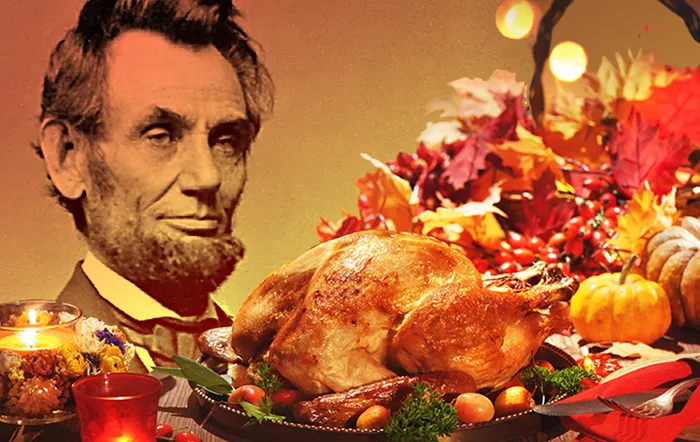
Abraham Lincoln is widely remembered as the president who led the United States through the Civil War. He is also remembered as the leader who formally established Thanksgiving as a national holiday. Many people celebrate Thanksgiving each year without knowing what Lincoln actually said about it. His words were not casual remarks. They were part of an official proclamation issued in 1863, at one of the darkest moments in American history.
Lincoln did not speak about Thanksgiving as a simple harvest festival. He spoke about it as a day of national gratitude, humility, and reflection. He connected Thanksgiving to faith, national unity, moral responsibility, and hope during war. His message was both spiritual and political. It was meant to strengthen a divided nation.
This article explains what Abraham Lincoln said about Thanksgiving, why he said it, and what his words meant in historical context. It presents his ideas clearly and logically, using simple language. By understanding Lincoln’s Thanksgiving proclamation, readers can better understand both the holiday and the man who shaped it.
The Historical Background: America in 1863
To understand what Lincoln said about Thanksgiving, we must first understand the year 1863. The United States was in the middle of the Civil War. The nation was divided between the Union in the North and the Confederacy in the South. Thousands of soldiers had died. Families were separated. The future of the country was uncertain.
In July 1863, the Union army won a major victory at the Battle of Gettysburg. This victory marked a turning point in the war. It gave the North new confidence. However, the suffering continued. The war was far from over.
In this tense and painful environment, Lincoln issued his Thanksgiving Proclamation on October 3, 1863. He called for a national day of Thanksgiving to be observed on the last Thursday of November. His purpose was not only to celebrate military success. He wanted Americans to pause and reflect on their blessings despite the war.
The Thanksgiving Proclamation of 1863
Lincoln’s most important statement about Thanksgiving appears in his 1863 proclamation. In this document, he invited Americans to set aside a day to give thanks to God for the nation’s blessings.
He began by noting that the year had been filled with both war and suffering. However, he also pointed out that the country had continued to grow. He observed that farms had produced abundant harvests. Industries were expanding. Population growth continued. Even in war, the nation had not collapsed.
Lincoln wrote that these blessings were not accidental. He believed they were signs of divine favor. He referred to God as the “Most High God” and credited Him with the country’s continued prosperity.
He called on Americans to acknowledge these blessings “with humble penitence for our national perverseness and disobedience.” This phrase shows that Lincoln did not view Thanksgiving as simple celebration. He believed the nation had moral faults. He suggested that Americans should be grateful but also repentant.
He asked citizens to pray for those who were suffering because of the war. He mentioned widows, orphans, mourners, and those wounded in battle. He asked the nation to pray for healing and restoration.
Finally, Lincoln expressed hope that the country would be reunited. His proclamation was not just about gratitude. It was about national reconciliation.
Gratitude in the Midst of War
One of the most striking aspects of Lincoln’s Thanksgiving message is his emphasis on gratitude during crisis. The Civil War had caused enormous destruction. Yet Lincoln focused on what had been preserved rather than what had been lost.
He described how the country’s agricultural fields remained productive. He noted that peace had been maintained with foreign nations. He pointed out that the laws were still respected. In other words, the nation was wounded but not destroyed.
Lincoln’s message was clear. Even during hardship, people should recognize their blessings. Gratitude, in his view, was not dependent on comfort. It was a moral duty.
This perspective reflects Lincoln’s broader philosophy. He often spoke about perseverance and moral responsibility. His Thanksgiving proclamation fits within this larger pattern of thought.
Faith and the Role of Divine Providence
Lincoln’s Thanksgiving proclamation was deeply religious in tone. He repeatedly credited God for the nation’s survival and prosperity. He did not describe these blessings as products of human strength alone.
Lincoln believed in divine providence, which means he believed God guided history. During the Civil War, he often reflected on God’s will. In other speeches, such as his Second Inaugural Address, he suggested that both sides of the war prayed to the same God.
In the Thanksgiving proclamation, Lincoln asked Americans to offer thanks to God and to seek forgiveness. This combination of gratitude and humility reflects his belief that national success required moral awareness.
He did not claim that America was perfect. Instead, he acknowledged “national perverseness and disobedience.” This phrase suggests that he saw the war as connected to moral failure, especially the issue of slavery.
By including repentance in the Thanksgiving message, Lincoln gave the holiday a serious moral dimension. It was not simply about food or family gatherings. It was about national character.
Thanksgiving as a National, Not Regional, Holiday
Before Lincoln’s proclamation, Thanksgiving was not consistently celebrated as a national holiday. Different states observed it on different dates. Some states did not observe it at all.
Lincoln’s proclamation helped standardize the holiday. By calling for a single national day of thanksgiving, he strengthened a sense of unity. This was especially important during the Civil War.
At a time when the nation was divided, a shared holiday carried symbolic power. It reminded citizens that they belonged to one country. Even if the war separated them physically, they shared common traditions and values.
Lincoln’s decision was influenced in part by Sarah Josepha Hale, a magazine editor who campaigned for a national Thanksgiving. However, the meaning of the proclamation was shaped by Lincoln’s own vision of unity.
Compassion for the Suffering
Another important part of Lincoln’s Thanksgiving message was his concern for those who suffered because of the war. He specifically mentioned widows, orphans, mourners, and wounded soldiers.
This detail shows that Lincoln understood the human cost of war. He did not ignore suffering. Instead, he called on Americans to respond with compassion.
Thanksgiving, in Lincoln’s view, was not only about private gratitude. It was about collective responsibility. Citizens were encouraged to care for those in need.
This idea aligns with Lincoln’s broader leadership style. He often expressed empathy in his speeches. He believed that national healing required kindness and charity.
Hope for National Healing
Lincoln’s proclamation included a forward-looking element. He expressed hope that God would “heal the wounds of the nation.” He desired the restoration of peace, harmony, and union.
This hope was not naive. The war was still ongoing. Many battles remained. Yet Lincoln’s words suggested confidence in eventual reconciliation.
By framing Thanksgiving as a moment of shared reflection, he encouraged Americans to look beyond immediate conflict. He invited them to imagine a reunited country.
In this way, Thanksgiving became linked to the idea of national renewal. It was not only a day of memory but also a day of vision.
The Language and Tone of the Proclamation
Lincoln’s language in the Thanksgiving proclamation was formal and dignified. It reflected the style of official government documents of the 19th century. The sentences were long and carefully structured.
Despite the formal tone, the message was accessible. The core ideas were simple: give thanks, acknowledge God, repent for wrongdoing, care for the suffering, and pray for peace.
The tone balanced optimism and seriousness. Lincoln did not deny the pain of war. However, he did not allow despair to dominate the message.
This balance made the proclamation powerful. It offered comfort without ignoring reality.
How Lincoln’s Words Shaped Modern Thanksgiving
Today, Thanksgiving in the United States is often associated with family meals, travel, and cultural traditions. Many people focus on food, especially turkey and seasonal dishes.
However, Lincoln’s proclamation gave the holiday its enduring national framework. His decision to establish a regular national observance created continuity. Later presidents followed his example and issued annual Thanksgiving proclamations.
Modern presidential proclamations often echo Lincoln’s themes. They emphasize gratitude, service, and unity. Although the language may be less religious today, the structure remains similar.
Lincoln’s words therefore continue to influence how Thanksgiving is understood at the national level.
Common Misunderstandings About Lincoln and Thanksgiving
Some people believe Lincoln invented Thanksgiving entirely. This is not accurate. Thanksgiving celebrations existed long before his presidency. Early colonists held harvest feasts. Several states observed Thanksgiving days during the 18th and early 19th centuries.
Lincoln’s role was to nationalize and regularize the holiday. He made it an annual, country-wide observance on a fixed day.
Another misunderstanding is that Lincoln’s proclamation was purely celebratory. In fact, it was deeply reflective and moral in tone. It acknowledged national wrongdoing and called for repentance.
Understanding these distinctions helps clarify what Lincoln actually said and did.
Lincoln’s Broader Philosophy and Thanksgiving
Lincoln often spoke about humility, moral accountability, and divine guidance. These themes appear not only in the Thanksgiving proclamation but also in other major speeches.
For example, in his Second Inaugural Address in 1865, Lincoln reflected on slavery as a cause of the war. He suggested that the conflict might be a form of divine judgment. This shows that his thinking about national sin and responsibility was consistent.
The Thanksgiving proclamation fits within this larger worldview. It expresses gratitude but also self-examination. It combines faith with civic duty.
For Lincoln, national strength depended on moral character. Thanksgiving provided an opportunity to renew that character.
The Lasting Legacy of Lincoln’s Thanksgiving Message
Lincoln’s words about Thanksgiving have endured for more than 160 years. Each November, Americans gather to share meals and express gratitude. Although customs have changed, the official foundation of the holiday traces back to 1863.
His proclamation reminds citizens that gratitude should extend beyond personal comfort. It should include awareness of national challenges and compassion for others.
In times of crisis, Lincoln’s message remains relevant. He demonstrated that thanksgiving is not limited to moments of peace. It can exist alongside hardship.
His approach offers a model for leadership. Even in war, he emphasized unity, humility, and hope.
Conclusion
Abraham Lincoln said that Thanksgiving should be a national day of gratitude to God for the country’s blessings. He also said it should be a time of humility and repentance. In 1863, during the Civil War, he called on Americans to thank God for continued prosperity, pray for those who suffered, and seek healing for the nation.
His Thanksgiving proclamation was not a simple celebration. It was a thoughtful reflection on faith, morality, and unity. He acknowledged both blessings and national faults. He urged compassion for widows, orphans, and wounded soldiers. He expressed hope for restored peace.
Lincoln’s words shaped Thanksgiving into a national tradition rooted in gratitude and responsibility. More than a century later, his message continues to influence how the holiday is understood. Thanksgiving, in his vision, is not only about food or festivity. It is about remembering blessings, recognizing moral duty, and hoping for a better and more united future.