
Easter Sunday is one of the most important Christian festivals in the world. It celebrates the resurrection of Jesus Christ and marks the end of Lent, a forty-day period of fasting, prayer, and reflection. Because Lent traditionally involves sacrifice and dietary restrictions, Easter Sunday becomes a joyful feast day. Food plays a central role in this celebration.
Across continents and cultures, families gather around tables filled with symbolic dishes. Some meals are simple and traditional. Others are elaborate and festive. Many foods eaten on Easter Sunday have deep religious meaning. Others reflect seasonal ingredients and local customs. In every case, Easter food expresses renewal, hope, and community.
This article explains what people eat on Easter Sunday in different regions of the world. It explores the symbolism of key ingredients, the influence of history, and the modern evolution of Easter menus.
The Symbolism of Food on Easter Sunday
Eggs as a Symbol of New Life
Eggs are one of the most universal Easter foods. In Christian symbolism, the egg represents the empty tomb of Christ and the promise of new life. During Lent, eggs were often forbidden. On Easter Sunday, people celebrated by eating them again.
In many countries, eggs are dyed in bright colors. Red eggs are especially important in Eastern Orthodox traditions. They symbolize the blood of Christ and resurrection.
Lamb as a Symbol of Sacrifice
Lamb is another powerful symbol. It represents Jesus as the “Lamb of God.” Eating lamb on Easter Sunday connects the feast with biblical tradition and ancient Jewish Passover practices.
Roast lamb is common in Europe, North America, Australia, and parts of the Middle East.
Bread as a Sign of Blessing and Community
Bread has long been central to Christian ritual. Special Easter breads are often sweet, enriched with eggs and butter, and decorated with crosses or braids. Sharing bread symbolizes unity and blessing.
Traditional Easter Sunday Foods in the United States
Glazed Ham
In the United States, ham is the most popular Easter main dish. It is often baked with a glaze made of brown sugar, honey, pineapple, or maple syrup. Ham became common because pigs were traditionally slaughtered in the fall, and cured hams were ready to eat in early spring.
Roast Lamb
Some American families prefer roast lamb. It may be seasoned with garlic, rosemary, and lemon. Lamb is especially popular among families with Mediterranean or European heritage.
Deviled Eggs
Deviled eggs are a classic Easter appetizer. Hard-boiled eggs are cut in half and filled with a mixture of egg yolk, mayonnaise, and mustard. They are simple but festive.
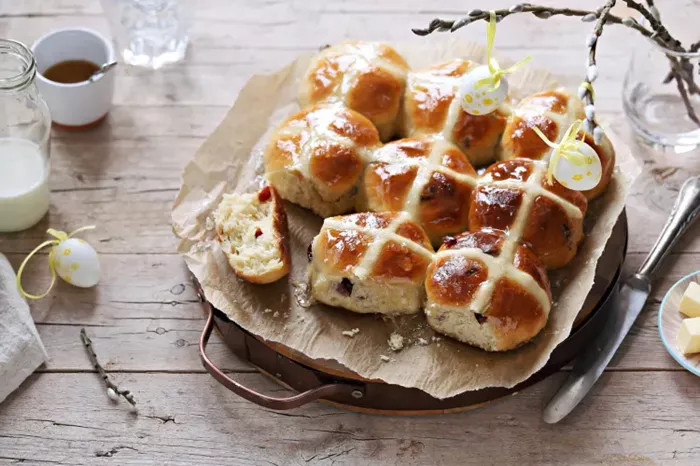
Hot Cross Buns
Hot cross buns are sweet rolls marked with a cross on top. They are traditionally eaten on Good Friday but are also common on Easter Sunday. The cross symbolizes the crucifixion.
Carrot Cake
Carrot cake is a popular dessert. Carrots represent spring and renewal. The cake is often topped with cream cheese frosting and decorated with small carrot shapes.
Traditional Easter Foods in the United Kingdom
Roast Lamb with Mint Sauce
In the United Kingdom, roast lamb is the traditional centerpiece of the Easter meal. It is served with mint sauce, roast potatoes, and seasonal vegetables.
Simnel Cake
Simnel cake is a fruit cake covered with marzipan. It is decorated with eleven marzipan balls representing the apostles, excluding Judas. The cake is associated with both Mothering Sunday and Easter.
Chocolate Eggs
Chocolate eggs became popular in the 19th century when confectioners began molding chocolate into egg shapes. Today, they are a standard part of British Easter celebrations.
Easter Sunday Foods in Italy
Agnello al Forno
In Italy, roast lamb, known as Agnello al Forno, is common. It is flavored with herbs, garlic, and olive oil.
Colomba di Pasqua
Colomba di Pasqua is a sweet bread shaped like a dove, symbolizing peace. It is similar to Christmas panettone but made especially for Easter.
Italian Easter Pie
Italian Easter pie is filled with ricotta cheese, eggs, and cured meats. It reflects abundance after the fasting period of Lent.
Easter Sunday Foods in Greece
Red-Dyed Eggs
Greek families dye eggs red and play a traditional cracking game called “tsougrisma.” The winner is believed to have good luck.
Magiritsa Soup
Magiritsa is a soup made from lamb offal, herbs, and egg-lemon sauce. It is traditionally eaten after midnight church services.
Roast Lamb on a Spit
On Easter Sunday, many Greek families roast a whole lamb outdoors. It is a social and festive activity.
Easter Sunday Foods in Eastern Europe
Kielbasa and Sausages
In Poland and other Eastern European countries, sausages such as kielbasa are central to the Easter meal.
Paska Bread
Paska is a rich, egg-based bread decorated with religious symbols. It is often blessed in church before being eaten.
Horseradish
Horseradish symbolizes the bitterness of Christ’s suffering. It is served alongside meats and eggs.
Easter Sunday Foods in Latin America
Capirotada
In Mexico, capirotada is a bread pudding made with cheese, raisins, nuts, and syrup. It reflects Catholic tradition.
Seafood Dishes
In many Latin American countries, seafood remains important during Holy Week. Fish dishes may still appear on Easter Sunday.
Easter Sunday Foods in Australia and New Zealand
Roast Meats
Roast lamb and beef are common in Australia and New Zealand. Seasonal vegetables are served alongside.
Pavlova
Pavlova, a meringue-based dessert topped with fruit, is often served during Easter gatherings.
Modern Trends in Easter Sunday Meals
Brunch Celebrations
Many families now celebrate Easter with brunch. Popular dishes include quiches, pastries, fresh fruit, and breakfast casseroles.
Vegetarian and Vegan Options
As dietary preferences change, more households include plant-based dishes. Vegetable tarts, lentil loaves, and dairy-free desserts are becoming common.
Global Fusion Menus
Modern Easter tables often mix traditions. A family may serve ham, Greek salad, Italian bread, and American desserts together.
The Role of Sweets and Confectionery
Chocolate Bunnies
Chocolate bunnies symbolize fertility and spring. They are especially popular among children.
Jelly Beans
Jelly beans are shaped like eggs and appear in Easter baskets.
Seasonal Ingredients and Spring Flavors
Easter falls in early spring in the Northern Hemisphere. Seasonal foods include asparagus, peas, carrots, radishes, and fresh herbs. These ingredients bring bright colors and fresh flavors to the table.
Conclusion
Easter Sunday is a celebration of renewal, faith, and community. Food is at the center of this celebration. Around the world, people eat symbolic dishes such as eggs, lamb, and special breads. Local culture shapes the menu, but the meaning remains similar. Easter meals express joy after sacrifice and hope after hardship. Whether the table features ham, lamb, sweet bread, or chocolate eggs, the purpose is the same: to gather loved ones and celebrate new life.