
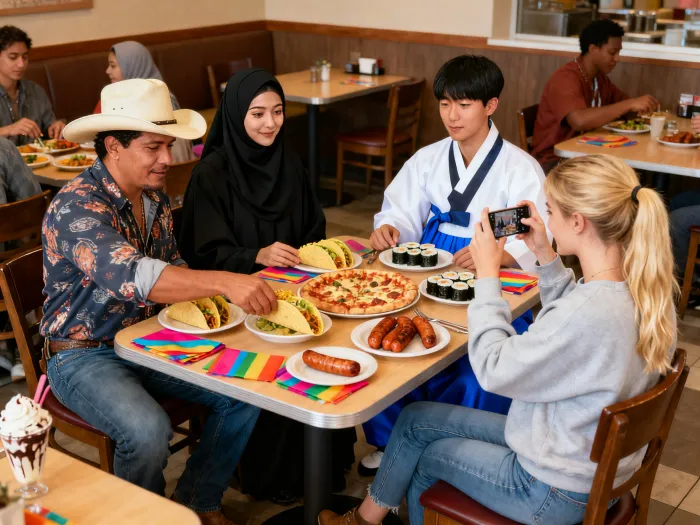
Thanksgiving is one of the most recognizable holidays in North America, celebrated with much fanfare, feasting, and familial gatherings. Its iconic imagery includes roasted turkeys, pumpkin pies, cornucopias overflowing with autumnal bounty, and families coming together to express gratitude. But as society becomes increasingly multicultural and globalized, questions naturally arise about how different religious groups, such as Muslims, engage with mainstream cultural festivities like Thanksgiving. Do Muslims celebrate Thanksgiving? Is it compatible with Islamic beliefs? Or do they simply pass by the day as another Thursday in November?
To answer these questions, it is essential to understand both the historical roots of Thanksgiving and the religious perspectives that shape Muslim attitudes toward celebrations. This article will take a deep dive into the heart of the matter, examining the festival from various angles: its origins, Islamic teachings on holidays and gratitude, real-life practices among Muslim communities in North America and beyond, debates within religious circles, and broader implications for cultural integration. We will also sprinkle in some humor—because let’s face it, any discussion about whether to eat turkey or not deserves at least a few lighthearted moments!
Thanksgiving traces its origins back to 1621 when English Pilgrims in Plymouth shared a harvest feast with Wampanoag Native Americans. The event is mythologized as a moment of harmony and thankfulness for survival after a harsh winter. Over centuries, Thanksgiving evolved into a secular holiday observed on the fourth Thursday of November in the United States and on the second Monday of October in Canada. Its primary themes are gratitude for blessings received and spending time with loved ones.
Muslims make up a significant portion of the population in both countries—about 3.5 million in the US according to Pew Research (2021) and over one million in Canada. Their presence raises interesting questions about how Islamic beliefs interact with local customs. The humor here is that some Muslims may ask: “Is turkey halal?” (Answer: Yes, if prepared according to Islamic law!) Others might wonder if giving thanks once a year is enough—since Islam encourages daily gratitude.
Islamic Teachings on Holidays and Gratitude
Islam has its own set of religious holidays known as Eids—Eid al-Fitr (marking the end of Ramadan) and Eid al-Adha (commemorating Prophet Abraham’s willingness to sacrifice his son). These are times for prayer, charity, family gatherings, feasting (yes, more feasting!), and acts of worship. Importantly, these holidays are prescribed by Islamic tradition; there are clear guidelines about their significance and how they are celebrated.
Gratitude is a central concept in Islam. Muslims are encouraged to be thankful every day—not just once a year—through prayers (such as saying “Alhamdulillah” which means “Praise be to God”), acts of kindness, and charity. The Qur’an is replete with verses urging believers to recognize their blessings: “If you are grateful, I will give you more” (Qur’an 14:7). The Prophet Muhammad frequently emphasized giving thanks for even small favors.
But what about non-religious holidays like Thanksgiving? Islamic scholars generally distinguish between religious celebrations (which must adhere strictly to Islamic law) and cultural or secular events. Some scholars advise caution when participating in festivals that have religious undertones or origins outside Islam; others adopt a more flexible stance for events centered on universal values such as gratitude or family togetherness.
Many Muslims thus find themselves navigating a delicate balance. On one hand, there’s no prohibition against expressing thanks or gathering with family—a concept deeply rooted in Islamic ethics. On the other hand, there may be concerns about participating in traditions that originated outside their faith or that have elements seen as incompatible with Islamic teachings (like excessive drinking or certain forms of entertainment).
And yes—there’s always room for humor! Some Muslim parents joke that every day is Thanksgiving when you have teenagers who raid your fridge without saying “thanks.” Others quip that an Eid feast looks suspiciously similar to a Thanksgiving dinner—minus the cranberry sauce.
Muslim Practices Around Thanksgiving: Reality Versus Theory
In practice, Muslims in North America approach Thanksgiving in diverse ways. There’s no single answer; rather, there’s a spectrum ranging from enthusiastic participation to polite abstention. For many families who have immigrated from countries where Thanksgiving isn’t celebrated (such as Pakistan, Egypt, Indonesia), the holiday can be puzzling at first: “Why does everyone buy so much turkey this week?” But over time, many adapt by finding ways to join in while maintaining their own traditions.
Some Muslim families wholeheartedly embrace Thanksgiving as an opportunity for family bonding and expressing gratitude—values consistent with Islamic principles. They gather around tables laden with halal versions of classic dishes (halal turkey stuffed with rice pilaf!), invite friends from various backgrounds, share stories of gratitude, and even participate in charitable activities such as volunteering at food banks or donating meals to those less fortunate.
Others take a more reserved approach. They may enjoy the time off work or school but skip formal celebrations due to religious concerns or personal preferences. For some, attending community events or interfaith dinners provides a way to connect with neighbors while sharing their own customs—like serving baklava alongside pumpkin pie.
There are also those who view Thanksgiving as an educational opportunity for children growing up in multicultural environments. Parents might explain the historical context (“Pilgrims met Native Americans… but let’s also talk about indigenous peoples’ rights today!”), discuss the importance of gratitude from both an American and Islamic perspective (“We say Alhamdulillah every day!”), and encourage respectful engagement with classmates who celebrate differently.
Interestingly enough, certain mosques organize special events around Thanksgiving—not as religious gatherings but as community outreach efforts. They host interfaith potlucks where people bring dishes representing their heritage (imagine biryani next to mashed potatoes), exchange stories about thankfulness across cultures, and highlight common values shared among faith communities.
Humor abounds during these festivities: Some Muslims joke about needing two fridges—one for Eid leftovers and one for Thanksgiving leftovers! Others debate which stuffing recipe reigns supreme: traditional bread stuffing or spiced rice stuffing?
Religious Debates: To Celebrate or Not To Celebrate?
The question “Do Muslims celebrate Thanksgiving?” has sparked lively debates within religious circles for decades. Scholars examine whether participation constitutes imitation of non-Muslim customs (known as “tashabbuh”), which some interpret as discouraged by Islamic jurisprudence. However, many contemporary scholars argue that if an event does not involve acts contrary to Islamic principles—such as worshipping other deities or engaging in prohibited activities—it can be permissible when approached as a cultural rather than religious observance.
Key points debated include:
- Intent: Is participation driven by desire to express genuine gratitude or simply following social trends?
- Content: Does the celebration involve activities inconsistent with Islamic ethics?
- Community Impact: Does joining foster greater understanding between Muslims and non-Muslims?
- Identity Preservation: Can Muslims maintain distinct religious identities while engaging positively with wider society?
Fatwas (religious rulings) issued by various scholars reflect this diversity of opinion. For instance:
- Some caution against celebrating any non-Islamic festivals lest they dilute religious identity.
- Others permit participation provided there’s no compromise on core beliefs—emphasizing gratitude without adopting non-Islamic rituals.
- A third group encourages involvement if it promotes social harmony and gives opportunities for dawah (sharing Islamic values).
In real life, these debates often play out over dinner tables rather than lecture halls! Family members might discuss whether saying grace before eating aligns with Islamic prayers (“Can we say Bismillah instead?”), whether inviting neighbors fosters goodwill (“Let’s invite Mr. Smith next door!”), or whether watching football after dinner is haram (“As long as it’s not during prayer time!”).
Humor finds its way here too: One uncle might insist on reciting Qur’anic verses before carving the turkey; another cousin might propose making Eid cookies shaped like turkeys next year!
Cultural Integration: Challenges and Opportunities
Celebrating—or not celebrating—Thanksgiving touches on broader themes of cultural integration facing Muslim communities worldwide. As societies grow more diverse, questions arise about how newcomers adapt without losing their unique identities.
For many Muslims living in Western countries, engaging with local traditions can be both enriching and challenging:
- Enrichment: Sharing meals fosters friendship; participating in community service builds bridges; exchanging stories deepens mutual understanding.
- Challenges: Navigating unfamiliar customs; facing stereotypes (“Do Muslims even eat turkey?”); reconciling differing views within families; ensuring children appreciate both heritage cultures and local norms.
- Opportunities: Promoting interfaith dialogue; highlighting universal values like gratitude; showcasing culinary diversity at public events.
Research by sociologists shows that inclusive celebrations promote social cohesion. When minority groups feel welcome—and are able to share aspects of their culture—they’re more likely to engage constructively within society at large.
On practical levels:
- Muslim-owned businesses often offer halal versions of traditional foods during Thanksgiving season.
- Community centers host multicultural potlucks blending flavors from around the world.
- Schools teach students about different cultural approaches to thankfulness—from American traditions to Islamic daily prayers.
There are humorous moments too: Young children sometimes confuse Eid al-Adha with Thanksgiving (“Are we eating lamb or turkey today?”); elders reminisce about learning how to make stuffing (“My grandma used cinnamon instead!”); friends compare notes on whose house has the best leftovers!
Global Perspectives: Muslims Outside North America
While this article focuses primarily on North American contexts, it’s worth exploring how Muslims elsewhere view Thanksgiving—or similar festivals celebrating gratitude. In many majority-Muslim countries such as Saudi Arabia, Turkey (the country—not just the bird!), Indonesia, Egypt, Pakistan, Malaysia—the concept of Thanksgiving isn’t widely recognized outside expat circles or international schools.
However:
- Expressions of gratitude are integral parts of everyday life through prayers and acts of charity.
- Some communities adopt local harvest festivals or national holidays focused on thankfulness but not modeled after American Thanksgiving.
- Expat families living abroad may host informal gatherings inspired by Thanksgiving traditions—often blending them with native customs (“Pumpkin pie alongside baklava!”).
- International schools teach students about global approaches to thankfulness—including American traditions—but frame them within broader discussions about culture and religion.
- Social media connects diaspora communities who share recipes (“How do I make halal gravy?”) and photos (“Our Turkish-inspired Thanksgiving!”) across continents.
In regions experiencing conflict or hardship—such as parts of Syria or Yemen—the act of gathering for food itself becomes an expression of profound gratitude amid adversity. Charitable organizations may organize meals around holidays coinciding with local calendars but emphasize universal values such as compassion and solidarity.
And yes—the humor remains global! Some families joke about having “Thanksgiving” every Friday after Jumu’ah prayers when everyone gathers for lunch; others invent new traditions blending global flavors (“Spiced samosas meet sweet potato casserole”).
The Role of Humor: Bridging Differences With Laughter
No discussion about festivalology would be complete without acknowledging humor—a powerful tool for bridging differences among cultures and faiths! Jokes help diffuse tensions around unfamiliar customs; laughter brings people together regardless of background.
In Muslim communities navigating Thanksgiving:
- Parents tease children about “turkey overload.”
- Siblings compete over who makes the fluffiest mashed potatoes—and whose biryani wins hearts!
- Friends swap stories about first attempts at making pumpkin pie (“It turned out green… is that normal?”).
- Elders reminisce about adapting recipes learned from neighbors (“My first stuffing had raisins because Mrs. Johnson said so!”).
- Community members invent playful mashups like “halal turducken” (a chicken stuffed inside a duck inside a turkey—all certified halal!).
- Social media memes circulate showing cartoon turkeys wearing hijabs!
These moments highlight how humor fosters resilience amid change—and reminds everyone that festivals are ultimately about joy shared among people who care for each other.
Conclusion: Gratitude Knows No Boundaries
So, do Muslims celebrate Thanksgiving? The answer is nuanced: many participate in their own way, aligned with their faith and local customs, while others may not, based on personal beliefs. Regardless, what unites all approaches is a shared value of gratitude, cherished across cultures and religions.
For those who celebrate, Thanksgiving is a time for family bonding, sharing meals that reflect diverse traditions, performing acts of charity, and reflecting on the blessings of the year. For those who don’t, their decision is respected, as long as they continue expressing gratitude through everyday actions and fostering goodwill in their communities.
Ultimately, whether you’re carving turkey or enjoying a different dish, the spirit of Thanksgiving—gratitude and connection—resonates universally. It’s a time to appreciate what we have, to share with others, and to say “thank you,” in whatever language we choose.
Gratitude builds stronger communities, and every day offers new reasons to be thankful. After all, Thanksgiving is about more than what’s on the plate—it’s about who you share it with.
Related topics: