
The Easter Vigil is one of the most important and profound liturgical celebrations in the Christian calendar, especially in the Roman Catholic Church. It marks the transition from the darkness of Good Friday to the joy and light of Easter Sunday. But many people, especially those unfamiliar with this sacred tradition, often wonder: How long does Easter Vigil Mass last? The short answer is that it usually lasts between two and three hours, but there is much more to understand about why this is so and what each part of the Mass involves.
In this comprehensive guide, we will explore the structure of the Easter Vigil, what happens during each part of the liturgy, and why it takes longer than other Masses. We will also look into how the length can vary based on local traditions and specific church practices.
What Is the Easter Vigil Mass?
The Easter Vigil Mass is not just a regular church service. It is the most solemn and sacred night of the entire Christian liturgical year. Held after sunset on Holy Saturday, it celebrates the resurrection of Jesus Christ. In essence, it is a night of transition—from death to life, from despair to hope.
Unlike the Easter Sunday morning Mass, which is festive but relatively short, the Easter Vigil is filled with ancient rituals, symbolic actions, and a deep sense of mystery. The Church sees it as the “mother of all vigils,” and it is rich in both tradition and meaning.
Why Does It Start at Night?
One of the reasons the Easter Vigil Mass lasts longer is because it must begin after sunset and end before sunrise on Easter Sunday. This timing is based on Jewish tradition, where the new day begins at sundown. The darkness of night represents the tomb of Christ, and the light that grows through the service symbolizes His resurrection.
Because it begins at night and includes a number of unique rites, this Mass is not only longer but also more elaborate than regular Masses.
How Long Is the Easter Vigil Mass?
On average, the Easter Vigil Mass lasts between two and three hours. In some parishes, especially cathedrals or churches with large congregations, it may even go beyond three hours. However, in smaller or more rural churches, it might last closer to two hours.
The duration of the Mass depends on several factors:
The number of readings chosen
Whether baptisms, confirmations, and first Holy Communions are included
The size of the congregation
The style of music and liturgy
Each of these elements can add time to the overall length, which is why there’s no exact, one-size-fits-all duration.
Understanding the Structure of the Easter Vigil
To understand why the Mass takes so long, we must look at its structure. The Easter Vigil is divided into four major parts:
The Service of Light
The Liturgy of the Word
The Liturgy of Baptism
The Liturgy of the Eucharist
Each part carries deep symbolic and theological meaning. Let’s explore each section in detail.
1. The Service of Light
This portion begins outside the church in darkness. A fire is kindled and blessed by the priest, symbolizing the light of Christ rising in glory. From this fire, the Paschal Candle is lit. This candle represents Christ, the light of the world.
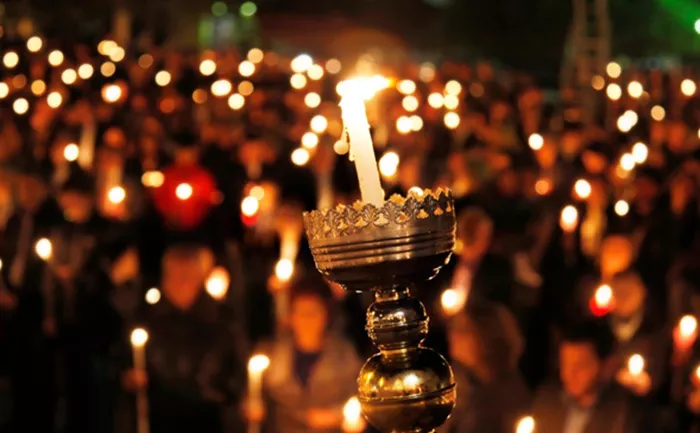
The congregation then enters the darkened church in a candlelit procession. As the flame is passed from person to person, the church is gradually illuminated. This dramatic transition from darkness to light mirrors the resurrection story.
Once inside, the Exsultet, or Easter Proclamation, is sung. This ancient chant is a poetic and theological masterpiece that announces the joy of the Resurrection.
This entire section usually takes about 30 to 45 minutes. However, if the fire lighting or procession is particularly elaborate, it can take a bit longer.
2. The Liturgy of the Word
This section includes up to nine Scripture readings, although fewer may be chosen depending on the parish. These readings tell the story of salvation history, from Creation to the Resurrection.
The first reading is from Genesis, describing the creation of the world.
The second reading usually tells the story of Abraham and Isaac.
Later readings include the parting of the Red Sea, the promise of a new heart, and other prophecies.
After each reading, there is a responsorial psalm and sometimes a period of silent reflection or a short homily.
Following the Old Testament readings, the Gloria is sung. The church bells are rung, symbolizing the joy of Easter. Then the Epistle is read, followed by the Gospel that proclaims the Resurrection.
Altogether, this section can last 45 minutes to an hour, depending on how many readings are included and how long the homily is.
3. The Liturgy of Baptism
This is one of the most moving parts of the Easter Vigil. It is during this part that catechumens—those who have prepared to become Christians—are baptized. The priest blesses the baptismal water, and the people renew their baptismal promises.
In many parishes, there are also confirmations and First Communions for those being received into the Church. This part of the liturgy can vary greatly in length. If several people are being baptized and confirmed, this section can last 30 minutes to over an hour.
This section includes several key rituals:
Blessing of the baptismal font
Baptisms with anointing and white garments
Confirmations with chrism oil
Sprinkling of holy water on the congregation
In churches where no baptisms are scheduled, this part is significantly shorter, consisting mainly of the blessing of water and the renewal of baptismal promises.
4. The Liturgy of the Eucharist
The final part of the Easter Vigil is the celebration of the Eucharist. This follows the usual structure seen in any Mass, but it is done with more solemnity and celebration. The Eucharist is seen as the climax of the vigil—Christ’s real presence is shared among the faithful.
Since this is a major feast, the music and prayers are usually more elaborate, and the reception of Communion can take longer, especially in large congregations.
This part generally takes 30 to 45 minutes, depending on the length of the prayers, the number of people receiving Communion, and the length of any additional hymns.
Variations in Timing
Not all Easter Vigils are the same. Here are some factors that can affect how long the Mass lasts:
Parish size: Larger parishes with more baptisms and communicants will have longer liturgies.
Number of readings: Churches may reduce the readings to five or even three to keep the Vigil shorter.
Musical style: Vigils with full choirs and traditional hymns tend to be longer.
Cultural practices: In some countries, Easter Vigil traditions include processions or additional prayers, which add time.
Even the homily—the priest’s reflection after the Gospel—can range from 5 minutes to 20 or more, depending on the celebrant.
Is the Length a Burden or a Blessing?
Some newcomers to the Easter Vigil may feel overwhelmed by the duration. But for those who understand the meaning behind the symbols and rituals, the time is not a burden—it’s a blessing. This night is filled with hope, light, and renewal. It is the heart of the Christian faith, and it deserves reverence and patience.
Many people who attend the Easter Vigil speak of it as one of the most moving experiences of their spiritual lives. The length reflects the depth of the mystery being celebrated—the victory of life over death.
Tips for Attending the Easter Vigil Mass
If you’re planning to attend the Easter Vigil Mass for the first time, here are some helpful suggestions:
Arrive early: Seating fills up quickly, especially in large churches.
Dress comfortably but respectfully: You’ll be seated, standing, and walking during different parts.
Bring a missal or liturgy guide: It will help you follow along with the readings and prayers.
Prepare spiritually: Understand that this is not a regular Sunday service. It is the most sacred liturgy of the year.
The Spiritual Significance of Time in the Easter Vigil
The long duration of the Easter Vigil is not accidental—it is theological. In Christian tradition, important events are not rushed. The Vigil is a journey through time, from the dawn of creation to the dawn of the Resurrection.
Time itself is transformed during this Mass. What might feel like hours on a clock becomes a sacred encounter with eternity. The waiting, the listening, the singing, and the praying—all reflect the watchfulness of the Church as it awaits the Risen Lord.
This is why staying through the whole Vigil, even if it lasts late into the night, is considered an act of devotion.
Conclusion
So, how long does Easter Vigil Mass last? It depends, but you can expect anywhere from two to three hours—and sometimes longer. While that might seem long by modern standards, the time is rich with meaning, history, and spiritual depth.
Every candle lit, every reading proclaimed, every drop of water blessed is part of a larger story—the story of salvation. For many Christians, this Mass is not just an obligation; it is the highlight of the entire liturgical year.
If you’ve never attended an Easter Vigil, consider making space for it in your life. Yes, it may be long. But more importantly, it is beautiful, transformative, and sacred. It is, truly, a night worth every minute.
Related topics: