
Easter is one of the most significant celebrations in the Christian calendar. For Catholics, it represents the resurrection of Jesus Christ from the dead. This event is seen as the cornerstone of the Christian faith, symbolizing the triumph of life over death. Understanding why Catholics celebrate Easter involves exploring its religious, historical, and cultural significance.
Introduction: The Importance of Easter in Catholicism
Easter marks the culmination of a series of events that begin with Lent, a season of penance and reflection. The final days of Lent, leading up to Holy Week, are especially important for Catholics. This period encompasses the Passion of Christ, his crucifixion on Good Friday, and ultimately, his resurrection on Easter Sunday. For Catholics, Easter is not just a day, but a season, beginning with the Easter Vigil on Holy Saturday night and extending for fifty days until Pentecost.
The resurrection of Jesus is central to the Catholic faith because it is believed to confirm Jesus’ divine nature and his victory over sin and death. This event is celebrated with joy, hope, and gratitude. The way Catholics observe Easter is deeply intertwined with their liturgical practices, personal devotion, and communal life.
The Liturgical Significance of Easter
In Catholicism, Easter is the highest and most important feast day in the Church calendar. The liturgy associated with Easter is both solemn and joyful.
Holy Week: The Preparation for Easter
Holy Week, which includes Palm Sunday, Holy Thursday, Good Friday, and Holy Saturday, is a time of deep reflection and commemoration. These days lead up to Easter and allow Catholics to spiritually prepare for the celebration of the resurrection.
Palm Sunday commemorates Jesus’ triumphal entry into Jerusalem.
Holy Thursday is the celebration of the Last Supper, where Jesus instituted the Eucharist.
Good Friday is the solemn observance of Jesus’ crucifixion and death.
Holy Saturday is a time of waiting, which culminates in the Easter Vigil.
The Easter Vigil is the most important Mass of the liturgical year. It begins in darkness, symbolizing the time of Jesus’ death, and gradually moves into light, representing his resurrection. During the vigil, Catholics traditionally light the Paschal candle, which symbolizes Christ’s light overcoming darkness.
The Easter Sunday Mass
On Easter Sunday, Catholics gather for a joyful Mass to celebrate the resurrection. The liturgy includes the reading of the Gospel, which recounts the resurrection story, as well as hymns, prayers, and the Eucharist. This Mass is an expression of the joy that comes with the belief that Christ has risen from the dead, and with him, all those who believe in him.
Easter Traditions and Customs in Catholicism
Beyond the liturgical aspects, Easter is also celebrated with various customs and traditions that hold deep cultural and religious meaning for Catholics.
Easter Eggs and the Symbolism of New Life
One of the most well-known Easter traditions is the exchange of Easter eggs. The egg is an ancient symbol of new life, and in Christianity, it has come to represent the resurrection. The shell of the egg symbolizes the sealed tomb of Jesus, and cracking the egg open symbolizes his resurrection from the dead.
Catholics often bless Easter eggs during the Easter Vigil or on Easter Sunday, before sharing them with family and friends. In some cultures, these eggs are decorated with intricate designs or vibrant colors, further enhancing their symbolic meaning.
Easter Baskets and the Blessing of Food
In many Catholic communities, it is customary to prepare Easter baskets filled with food. These baskets are often taken to church to be blessed by the priest during the Easter Vigil or on Easter Sunday. The foods in the baskets often include items like bread, eggs, butter, cheese, and ham, all of which have symbolic meanings related to life, fertility, and the abundance of the resurrection.
The Easter Bunny: A Cultural Add-on
Though not strictly a Catholic tradition, the Easter Bunny has become a widely recognized symbol of Easter in many countries, including those with strong Catholic communities. The origins of the Easter Bunny are not directly related to Christianity, but its association with fertility and new life aligns with the themes of Easter.
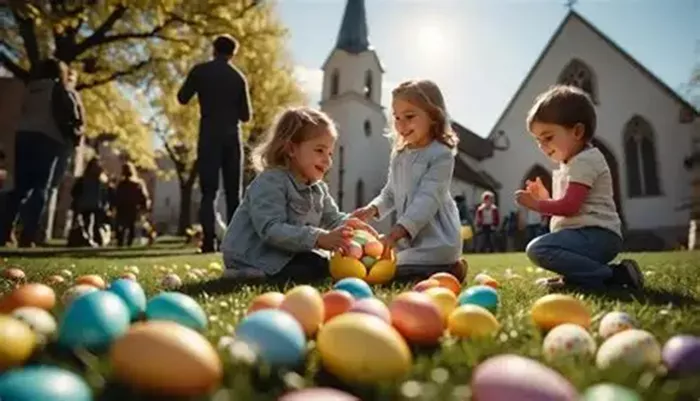
In many cultures, children look forward to Easter egg hunts, where they search for chocolate eggs or small toys hidden by the Easter Bunny. This tradition brings joy and excitement to the celebration, especially for younger generations.
Family Gatherings and Feasts
Easter is also a time for family gatherings. Many Catholic families come together to share a festive meal, often featuring foods like lamb, ham, and various desserts. These meals are a way of celebrating the joy of the resurrection and sharing the blessings of the season with loved ones.
In some cultures, Easter Sunday is also a day for visiting the graves of deceased family members, honoring them with prayers and flowers. This practice serves as a reminder of the Catholic belief in the resurrection of the dead and the hope of eternal life.
Easter and the Catholic Doctrine of Resurrection
For Catholics, the resurrection of Jesus is a theological event with profound implications. It is through his resurrection that Jesus defeated sin and death, offering humanity the hope of eternal life. The Catechism of the Catholic Church teaches that Christ’s resurrection is not just a historical event but a present reality that transforms the lives of believers.
The Victory Over Sin and Death
Catholics believe that through Christ’s resurrection, the power of sin and death was broken. This victory is not just for Jesus, but for all who believe in him. The resurrection is the promise of new life, both in the present and in the future. In the Catholic understanding, Easter is a reminder that death is not the end but a passage to eternal life.
The Role of the Sacraments
The resurrection is also closely tied to the Catholic sacraments, especially the sacrament of the Eucharist. During Easter Mass, Catholics partake in the Eucharist, which they believe is the body and blood of Christ. Through this sacrament, Catholics believe they are participating in the risen life of Jesus. The Eucharist is a central aspect of Catholic worship, and it is through this sacrament that the resurrection becomes a present reality for believers.
Easter in Catholic Culture Around the World
Easter celebrations can vary widely depending on the cultural context, but the core themes of resurrection and new life remain central to all Catholic communities.
Easter in Europe
In many European countries, Easter is a time for elaborate processions and celebrations. In Spain, the Semana Santa (Holy Week) processions are famous for their dramatic reenactments of the Passion of Christ. Similarly, in Italy, Easter is celebrated with a mixture of religious rituals and festive meals, often featuring lamb as a traditional dish.
In Poland, Easter Monday is celebrated as “Śmigus-Dyngus,” a day when people playfully splash each other with water. This custom is believed to symbolize the cleansing of sin and the renewal of life through baptism.
Easter in Latin America
In Latin American countries, Easter is often marked by vibrant processions, feasts, and family gatherings. In Mexico, the “Semana Santa” celebrations are one of the most important religious observances of the year. These celebrations include reenactments of the Passion of Christ, music, and traditional foods. Many Catholic communities in Latin America also engage in acts of charity during Easter, such as helping the poor and the needy.
Easter in the United States
In the United States, Catholic families often celebrate Easter with church services, family meals, and egg hunts. The Easter Vigil is a time for Catholics to reflect on the resurrection, and many families use the opportunity to celebrate with a festive meal. The commercialized version of Easter, with its focus on the Easter Bunny and chocolate eggs, is also widely practiced, although the religious significance remains central for Catholics.
Conclusion
Easter is not just a celebration of an event that occurred thousands of years ago; for Catholics, it is a living reality that impacts their daily lives. Through the resurrection of Jesus Christ, Catholics believe they are offered the hope of eternal life, freedom from sin, and a new beginning. Whether through the liturgical practices, cultural customs, or personal devotion, Easter serves as a reminder of God’s love and the promise of salvation.
The joy of Easter is meant to last beyond just one day, continuing through the Easter season and inspiring Catholics to live out the hope and new life they celebrate. It is a time of renewal, both spiritually and physically, as Catholics commemorate Christ’s victory over death and embrace the promise of life everlasting.
Related topics: