
Easter is one of the most important holidays in the Christian calendar. It is celebrated with joy and reverence, marking the resurrection of Jesus Christ. Traditions surrounding Easter vary across cultures, but one of the most cherished parts of the celebration is the food. Families and communities come together to enjoy special meals that symbolize renewal, hope, and the arrival of spring. In this article, we will explore the traditional foods eaten during Easter, from savory dishes to sweet treats, and how they vary by region.
Introduction to Easter Foods
The foods traditionally eaten on Easter reflect a rich history of religious symbolism, local customs, and the availability of seasonal ingredients. Easter is a time of feasting, and the meals enjoyed on this day often include rich, hearty dishes that mark the end of the Lenten fasting period. As spring brings fresh ingredients, Easter meals incorporate vibrant vegetables, succulent meats, and an array of baked goods that brighten up the table. Let’s take a closer look at some of the most popular Easter foods across different cultures.
Traditional Easter Foods Across Different Cultures
1. Lamb: A Symbol of Sacrifice and Resurrection
Lamb is one of the most iconic dishes traditionally served at Easter meals, particularly in Western and Mediterranean cultures. In Christianity, the lamb is a symbol of Jesus Christ, often referred to as the “Lamb of God.” Lamb is typically roasted and served with a variety of sides, such as potatoes, vegetables, and mint sauce. In some regions, the lamb is served with a rich gravy or a lemon-based sauce, offering a perfect balance of flavors.
2. Ham: A Festive Dish with Regional Variations
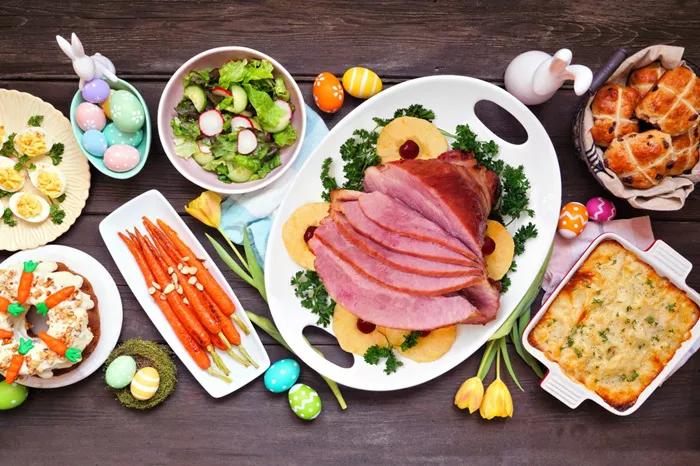
In many countries, particularly in the United States and parts of Europe, ham is a popular Easter dish. The tradition of eating ham at Easter stems from its association with spring and the end of winter. Pigs are usually slaughtered in the fall, and their meat is preserved for the winter months. By Easter, the preserved ham is ready to be enjoyed. The ham is often glazed with honey, brown sugar, or mustard, and it may be served with sides like baked beans, scalloped potatoes, or asparagus.
3. Eggs: A Symbol of New Life and Rebirth
Eggs are perhaps the most universal symbol of Easter. They represent new life, fertility, and resurrection. In many cultures, eggs are dyed or decorated as part of the Easter celebrations. In some regions, hard-boiled eggs are served as part of the Easter meal, often accompanied by pickled vegetables or other appetizers. Additionally, in countries like Greece, eggs are sometimes dyed red to symbolize the blood of Christ.
4. Hot Cross Buns: A Sweet Tradition
Hot cross buns are a traditional Easter treat in many English-speaking countries. These sweet, spiced buns are typically served on Good Friday, the day before Easter, to mark the crucifixion of Jesus Christ. The buns are marked with a cross on top, which represents the crucifixion. Hot cross buns are made with currants or raisins and are often flavored with cinnamon and nutmeg. They are delicious when served warm with butter.
5. Easter Bread: A Symbol of Blessings and Good Fortune
In many Eastern European countries, Easter bread is an essential part of the Easter feast. This sweet, rich bread is often braided and decorated with colored eggs or sugar. In countries like Italy and Greece, Easter bread is made with a dough that includes eggs, butter, and milk, and it is often flavored with citrus zest or aniseed. The bread is seen as a symbol of abundance and blessings, and it is shared among family and friends during the Easter celebration.
6. Easter Chocolate: Sweet Treats for the Whole Family
Chocolate has become synonymous with Easter, especially in Western cultures. The tradition of eating chocolate during Easter dates back to the 19th century when chocolate eggs and bunnies began to be popularized as Easter treats. Today, chocolate eggs, bunnies, and other confections are enjoyed by both children and adults. In some countries, Easter Sunday is marked by an egg hunt, where children search for hidden chocolate eggs.
7. Spring Vegetables: Celebrating the Season
Spring vegetables are an important part of the Easter meal. As Easter falls in spring in the Northern Hemisphere, the season brings fresh produce that is incorporated into many traditional dishes. Asparagus, peas, carrots, and radishes are some of the vegetables commonly served alongside meats like lamb or ham. These vegetables symbolize the renewal of life and are often prepared simply, such as steamed, roasted, or sautéed, to preserve their fresh flavors.
Regional Variations of Easter Foods
1. Italian Easter Foods
In Italy, Easter meals are rich in symbolism and flavor. One of the most famous Easter dishes is “lamb with artichokes,” a traditional Roman recipe. Italians also enjoy “colomba di Pasqua,” a dove-shaped cake that is similar to panettone and is made with candied fruit and almonds. The cake is often served as a dessert after the main meal, and it represents peace and renewal.
2. Greek Easter Foods
In Greece, Easter is celebrated with a variety of delicious foods, such as “lamb kleftiko” (slow-cooked lamb with vegetables) and “magiritsa,” a soup made from lamb offal. Greeks also enjoy “tsoureki,” a sweet braided bread flavored with orange and mahlab, and decorated with red eggs. Easter is a time for family gatherings, and these foods are often shared during a festive meal.
3. Russian Easter Foods
In Russia, Easter is celebrated with a traditional meal that includes “paskha,” a dessert made from cottage cheese, butter, sugar, and eggs, often shaped into a pyramid. Russians also enjoy “kulich,” a tall, cylindrical cake decorated with icing and colorful sprinkles. The meal often includes meats, cheeses, and vegetables, as well as bread and eggs.
Conclusion
In conclusion, Easter is a time of celebration, renewal, and togetherness, and the food eaten during this holiday plays an essential role in marking the occasion. From lamb and ham to eggs and sweet treats, the foods associated with Easter are rich in symbolism and flavor. They not only reflect the religious significance of the holiday but also celebrate the arrival of spring and the joys of family and community. Whether you’re enjoying a traditional Easter dinner with your loved ones or indulging in a sweet chocolate egg, the foods of Easter bring warmth, joy, and a sense of renewal to the table.
Related topics: