
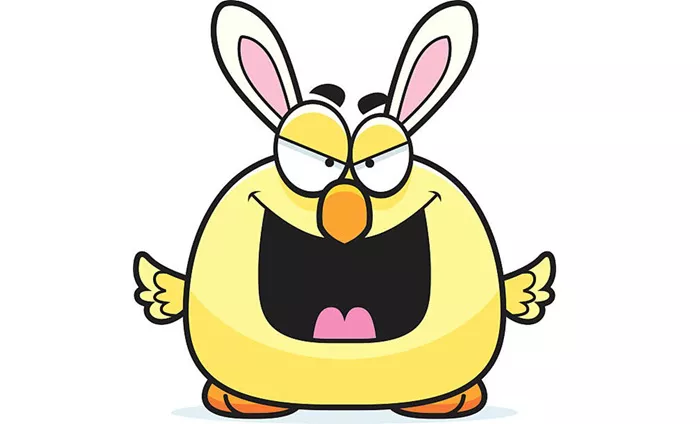
The Easter Bunny is a beloved figure in many cultures. Each spring, children await its arrival, anticipating colorful eggs and sweet treats. The creature is usually imagined as a cheerful, fluffy rabbit, sometimes wearing a vest, hopping across gardens and lawns. It hides eggs filled with candy or small toys, leaving surprises for eager children to find.
Yet, despite its popularity, some have wondered: Is the Easter Bunny evil? This question, though strange at first, has gained attention online and in popular culture. Some parents, theologians, and curious thinkers have begun to look more closely at this springtime icon. Could there be a darker side to the Easter Bunny? Is it truly a harmless figure of fun, or does it hide a more sinister nature beneath its cheerful exterior?
In this article, we will explore the origins of the Easter Bunny, how its image has evolved, and why some people associate it with unsettling themes. We will consider religious, historical, and psychological perspectives. Ultimately, we will examine whether these fears have any real basis—or if they simply reflect a misunderstanding of a complex cultural symbol.
The Origins of the Easter Bunny
To understand whether the Easter Bunny is evil, we must first ask: Where did it come from?
The idea of a magical bunny that delivers eggs is not found in the Bible. Nor is it originally a Christian concept. The Easter Bunny’s roots go back to pre-Christian, pagan spring festivals. In ancient Europe, spring was celebrated with festivals that honored fertility and renewal. One such celebration honored the goddess Eostre (also spelled Ostara), a figure associated with springtime, new life, and dawn. According to folklore, her sacred animal was a hare or rabbit.
The connection between rabbits and fertility is easy to understand. Rabbits reproduce rapidly, and they often symbolize new life. Over time, as Christianity spread through Europe, older spring traditions merged with the celebration of Easter—the Christian holiday that marks Jesus Christ’s resurrection.
The first written mention of the Easter Bunny appears in 17th-century Germany. There, children believed that a creature called the “Osterhase” (Easter hare) laid colored eggs for well-behaved children. German immigrants later brought this tradition to America, where it blended with other customs and became more commercialized.
So, from the beginning, the Easter Bunny has been a symbol of life, renewal, and spring—not of evil or darkness.
Symbols of Innocence or Trickery?
If the Easter Bunny represents life and joy, why do some people question its morality?
One reason may be the nature of myths themselves. Symbolic figures, like the Easter Bunny, can mean different things to different people. To a child, the bunny may be fun and exciting. But to an adult, especially one with religious or psychological concerns, it may seem odd or unsettling.
Some people argue that the Easter Bunny misleads children. It encourages belief in something fictional—something parents later reveal as false. This, they say, damages trust. Others believe that the focus on eggs, candy, and a magical rabbit distracts from the true meaning of Easter: the resurrection of Jesus Christ.
In some online discussions, the Easter Bunny is even portrayed as a trickster figure. A trickster is a character from folklore who bends rules, causes confusion, or hides its true purpose. Tricksters are not always evil—but they are rarely simple or innocent.
Is the Easter Bunny one of these figures? Does it deceive, distract, or manipulate in ways that might harm children or distort religious meaning?
Religious Concerns and Criticism
Many of the strongest objections to the Easter Bunny come from religious communities. Some Christian families avoid the Easter Bunny entirely. They believe it promotes a secular or pagan version of Easter that takes the focus away from Christ.
These critics argue that the Easter Bunny has no place in a holy holiday. They see it as part of a wider trend of commercialization that turns sacred days into shopping events. Chocolate eggs, toys, and bunny-themed decorations may seem innocent, but they often replace prayer, worship, and reflection.
Some even suggest that the Easter Bunny is a form of idolatry. In their view, celebrating a non-Christian symbol during Easter goes against the spirit of the holiday. Others claim the bunny is linked to occult or pagan practices—though these claims are often based on weak historical connections or misunderstandings.
While these views are not held by everyone, they reflect genuine concerns. For many believers, the Easter Bunny is not exactly evil—but it is seen as distracting, misleading, or spiritually dangerous.
Commercialization and Cultural Influence
Another reason some view the Easter Bunny with suspicion is its role in modern consumer culture. The bunny has become a mascot for a multibillion-dollar industry. Candy companies, toy manufacturers, and retailers use the Easter Bunny to sell products.
In this sense, the bunny has shifted from a symbol of nature and renewal to one of profit and marketing. Critics argue that this transformation cheapens Easter. It turns a meaningful time into another excuse to spend money and buy sugar-filled products.
This commercialization is not the Easter Bunny’s fault, of course. It is the result of social and economic forces. But the bunny becomes the face of those forces. It carries the blame for a cultural shift that many people dislike.
Some go further. They suggest that marketing to children using a magical creature is a form of manipulation. Bright colors, cute designs, and emotional excitement are used to encourage children to want more toys and candy. In this view, the Easter Bunny is not evil in a supernatural sense—but it is used in ways that some consider unethical.
The Psychological Perspective: Fear and Projection
Another reason people question the Easter Bunny’s goodness is psychological. Human beings often project their feelings onto symbols. A friendly rabbit may seem comforting to one person—and creepy to another.
Some people find the Easter Bunny’s appearance strange. Life-sized costumes, especially when worn by adults, can feel uncanny or even disturbing. The sight of a giant rabbit with a human body and frozen smile can evoke fear rather than joy.
This fear is sometimes linked to “maskaphobia,” or fear of masked figures. It is also connected to the “uncanny valley” effect—when something looks almost human but not quite, causing discomfort.
In other cases, people project negative feelings onto the bunny because of their own doubts or experiences. If someone feels betrayed by myths like Santa Claus or the Tooth Fairy, they may become skeptical of other magical figures. The Easter Bunny, as another parental invention, becomes a target for those feelings.
So, when people ask, “Is the Easter Bunny evil?”, they may be expressing discomfort, doubt, or mistrust—not about the bunny itself, but about what it represents in their own minds.
Pop Culture and Horror Interpretations
Another source of fear surrounding the Easter Bunny comes from modern media. In horror movies, books, and internet stories, the Easter Bunny is sometimes portrayed as a monster. With red eyes, sharp teeth, or dark motives, these versions twist the traditional image into something terrifying.
Why do storytellers do this? One reason is contrast. The idea of turning a friendly figure into a scary one creates shock and interest. It plays with our expectations and challenges the way we see familiar things.
But horror stories also reflect deeper fears. They often use symbolic figures—like clowns, dolls, or bunnies—to explore ideas of innocence lost or goodness gone wrong. The Easter Bunny becomes a vessel for exploring fear, trauma, or the darker side of childhood.
These portrayals are not meant to be taken literally. But they shape how some people think about the Easter Bunny. After seeing it used in scary ways, they may begin to feel uneasy, even when faced with a traditional image.
Cultural Differences and Global Views
In some cultures, the Easter Bunny is barely known. In others, it is widely loved. Its meaning and impact vary depending on where you are.
In the United States, the Easter Bunny is a major part of spring celebrations. In Germany, its birthplace, it still plays a role—though other traditions, like egg trees or candle lighting, may be just as important. In places like the UK, Australia, and Canada, the bunny is familiar, but not always central.
In many Christian-majority countries, the bunny is embraced as a fun tradition. But in others, it is met with caution or indifference. In some Eastern Orthodox traditions, for example, Easter is deeply sacred and less commercialized. The bunny may be seen as a Western import with little relevance.
These differences show that the Easter Bunny is not a universal figure. It is shaped by culture, economics, and history. What seems harmless in one place may seem odd or even threatening in another.
Is the Easter Bunny Evil? A Final Judgment
After exploring history, religion, psychology, and culture, we return to our main question: Is the Easter Bunny evil?
The answer, based on evidence, is no.
The Easter Bunny is not a demonic figure. It does not promote hatred, violence, or cruelty. Its origins are rooted in nature, fertility, and celebration. It has been used to bring joy, surprise, and excitement to children. It is a symbol—one that has taken many forms, but never a force of evil in itself.
That said, the bunny can be misunderstood. It can be used in ways that are problematic. When it becomes a tool for excessive commercialization or distracts from meaningful traditions, people may rightly question its value. When it is portrayed in horror media, it may take on dark tones—but those are creative inventions, not truths.
The Easter Bunny is, like many cultural symbols, a mirror. It reflects what we believe, fear, or desire. To some, it is innocent and joyful. To others, it is empty or even unsettling. But its true nature lies in how we choose to use it—and what we decide it should represent.
Conclusion
The Easter Bunny is a character that has traveled through time and culture. From pagan hare to German folklore to modern marketing icon, it has worn many faces. Whether it is seen as playful, deceptive, or even dark depends on the viewer’s beliefs, values, and experiences.
Calling the Easter Bunny “evil” oversimplifies a rich and complicated tradition. It is not a creature with intent or power of its own. It is a symbol—of spring, surprise, and the strange mix of myth and memory that shapes our holidays.
As with all symbols, the Easter Bunny invites us to ask questions. What do we want Easter to mean? What do we teach our children? How do we balance joy and faith, fun and truth?
These are the real questions behind the fear. And in answering them, we discover not the evil of the Easter Bunny—but the meaning we choose to give it.
Related topics: