
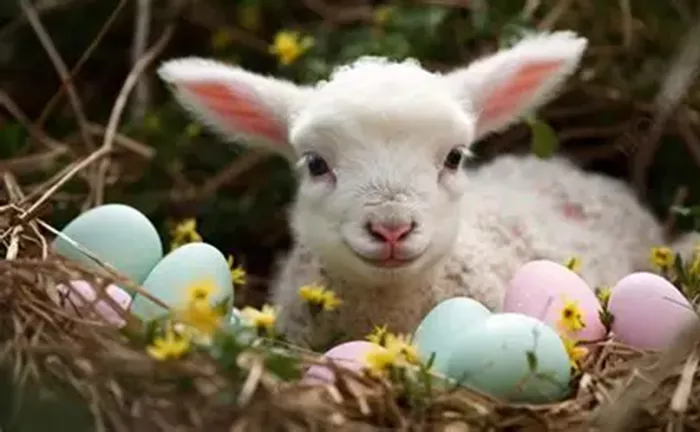
Easter is one of the most significant celebrations in the Christian calendar, marking the resurrection of Jesus Christ. While the customs and traditions around Easter vary worldwide, one of the most enduring symbols of the holiday is the lamb. It is common to find lamb on the Easter dinner table, but why? Why has this particular animal become so deeply tied to Easter celebrations? In this article, we will explore the historical, cultural, and religious significance of lamb on Easter and unravel the connections between this innocent creature and the holiday’s themes of renewal, sacrifice, and hope.
The Symbolism of Lamb in Christianity
At the core of Easter’s spiritual meaning lies the death and resurrection of Jesus Christ. Christians believe that Jesus’ sacrifice on the cross was the ultimate act of atonement for the sins of humanity, and his resurrection represents the triumph of life over death.
The lamb has been a central symbol of sacrifice in Christian theology for centuries. Jesus is often referred to as the “Lamb of God,” a title that has its roots in biblical tradition. This reference directly ties the lamb to the concept of sacrifice and redemption. To understand the connection between lamb and Easter, it is essential to look at the biblical foundations and how they influenced the development of this tradition.
The Passover Connection
The tradition of eating lamb on Easter can be traced back to the Jewish festival of Passover. The story of Passover is deeply intertwined with the history of Easter and its origins. According to the Old Testament, when the Israelites were enslaved in Egypt, God commanded them to sacrifice a lamb and use its blood to mark their doorposts. This act would spare them from the final plague—the death of the firstborn—which passed over the homes that had the lamb’s blood on them. The lamb, in this context, served as a symbol of protection and salvation.
Jesus Christ’s death, which coincided with the Jewish Passover festival, is seen by Christians as the fulfillment of the Passover lamb’s symbolism. In the New Testament, John the Baptist famously declared Jesus as the “Lamb of God who takes away the sin of the world” (John 1:29). This connection between Jesus and the Passover lamb further strengthens the association of lamb with Easter.
The Resurrection and the Lamb: A Symbol of Renewal
Easter is ultimately a celebration of life and renewal, themes that are embodied in the symbolism of the lamb. Lambs are often associated with innocence, purity, and new beginnings. In the agricultural societies of the ancient world, lambs were born in the spring, a season that represents new life. The birth of lambs in the spring aligns with the themes of rebirth and resurrection that are central to Easter.
Just as the lamb is born into a new season, Christians believe that Jesus’ resurrection marked the beginning of a new era for humanity—one of salvation, grace, and eternal life. The lamb, as a symbol of purity and renewal, aligns perfectly with the Christian understanding of Jesus’ resurrection as the ultimate victory over death and sin.
The Role of Lamb in Early Christian Traditions
The association of lamb with Easter is not merely a modern invention. In the early centuries of Christianity, the lamb played a prominent role in liturgical practices. Early Christians often depicted Jesus as a lamb, and this image was especially prominent in the catacombs of Rome, where Christians sought to worship in secret during times of persecution. The lamb became a symbol of both Christ’s meekness and his ultimate victory over sin.
The act of eating lamb during Easter celebrations may have originated as an extension of the Paschal lamb tradition, which commemorates the sacrificial lamb of the Jewish Passover. Early Christians, many of whom were originally Jewish, likely incorporated the Passover lamb into their Easter feasts as a way of symbolizing Jesus’ role as the sacrificial lamb who would bring salvation to the world.
Lamb as the Centerpiece of the Easter Meal
For many Christians, the Easter meal is an essential part of the holiday. It is a time to gather with family and friends and celebrate the joy of the resurrection. The tradition of serving lamb during Easter meals can be seen as both a continuation of biblical tradition and a way of marking the significance of the holiday.
In many cultures, the Easter lamb is roasted and served with herbs, potatoes, and other spring vegetables. The meal is often enjoyed after a church service or in the privacy of home. The lamb is often the centerpiece of the meal, symbolizing not only the sacrifice of Jesus Christ but also the joy of new life and renewal. In this sense, eating lamb during Easter is a way of connecting with both the spiritual and the cultural significance of the holiday.
Lamb in Easter Traditions Across the World
While the practice of eating lamb on Easter is prevalent in many Christian cultures, the way lamb is prepared and enjoyed varies significantly across different countries and regions. From the Mediterranean to the Americas, the lamb serves as a reminder of Christ’s sacrifice and the promise of resurrection.
Greece: In Greece, lamb is often roasted on a spit, seasoned with garlic, olive oil, and herbs. This method of preparation is traditional for Easter, and the meal is shared among family and friends. Lamb is also featured in Greek Easter soup, which is made from lamb organs and vegetables.
Italy: In Italy, lamb is typically prepared in a variety of ways, including roasting, grilling, or stewing. In some regions, lamb is served with artichokes and potatoes, while others prepare a rich lamb ragu sauce. The lamb is enjoyed as a symbol of Christ’s sacrifice and as part of a joyful Easter feast.
United Kingdom: In the UK, roast lamb is a traditional Easter dish, often served with mint sauce. The mint sauce is symbolic of the spring season, and the meal is often accompanied by roasted vegetables and potatoes. The lamb represents both sacrifice and new life, aligning with the themes of Easter.
Latin America: In many Latin American countries, lamb is also featured in Easter feasts, though it is prepared with local spices and ingredients. In countries like Mexico, Peru, and Argentina, lamb is often roasted or grilled, and it is a key part of family celebrations during Holy Week.
United States: In the U.S., lamb may not be as widely consumed as in some other countries, but it is still a traditional Easter dish in many households. American families may roast lamb or prepare it in various ways, including grilling or slow-cooking it. Lamb is often served with seasonal vegetables and a variety of side dishes.
Cultural Significance of Lamb During Easter
The lamb’s cultural significance extends beyond just its biblical connections. In many societies, the lamb represents fertility, renewal, and abundance—traits that are particularly important during the spring season. Easter, which coincides with the arrival of spring in the Northern Hemisphere, is a time when nature itself is reborn. The symbolism of lamb thus resonates not only with Christians but also with broader cultural themes of growth, renewal, and hope.
In folklore, the lamb has often been seen as a symbol of purity, innocence, and gentleness. These qualities, which are associated with the lamb, are also attributed to the figure of Jesus Christ in Christian teachings. By eating lamb on Easter, people are reminded of these virtues and the promise of spiritual renewal that Easter brings.
Conclusion
The tradition of eating lamb on Easter is a powerful symbol that connects Christian faith, cultural practices, and seasonal renewal. Whether it is the biblical association with Jesus as the “Lamb of God,” the connection to the Jewish Passover tradition, or the broader themes of innocence and rebirth, lamb has become an enduring symbol of the Easter holiday.
As families gather around the Easter table to enjoy lamb and celebrate the resurrection of Jesus Christ, they partake in a tradition that stretches back thousands of years. The lamb, as both a religious and cultural symbol, serves as a reminder of the hope, sacrifice, and renewal that Easter represents.
Through this simple yet profound practice, the lamb continues to be a central figure in the celebration of Easter, linking the past with the present and offering a symbol of faith, hope, and new beginnings for generations to come.
Related topics: