
Greek Easter is one of the most significant religious celebrations in Greece. Unlike Western Easter, Greek Easter often falls on a different date due to the use of the Julian calendar by the Greek Orthodox Church. The festival is deeply rooted in religious tradition, community gatherings, and unique cultural customs. Understanding what Greek Easter is called and how it is celebrated helps to appreciate its importance in Greek culture and the Orthodox Christian world.
The Name of Greek Easter
In Greece, Easter is called Pascha. The word Pascha comes from the Hebrew word Pesach, which means Passover. This highlights the connection between the Jewish Passover and the Christian celebration of Jesus Christ’s resurrection. Pascha is not just a religious term; it also represents a period of joy, renewal, and family togetherness in Greek society.
Greek Orthodox Calendar and Pascha
Greek Easter, or Pascha, is celebrated according to the Greek Orthodox Church calendar. The church uses the Julian calendar to determine the date, unlike Western churches that follow the Gregorian calendar. This difference often results in Greek Easter falling one to five weeks later than Western Easter. The date is determined as the first Sunday after the full moon following the vernal equinox, with adjustments according to Orthodox traditions.
Preparation for Greek Easter
Greek Easter is preceded by a period called Lent, which lasts for 40 days. During Lent, Greek Orthodox Christians fast and refrain from eating meat, dairy products, and certain other foods. This period is a time of reflection, prayer, and spiritual cleansing. Holy Week, the week leading up to Pascha, includes many religious ceremonies that are crucial to the celebration.
Holy Week Traditions
Clean Monday
The Easter period begins with Clean Monday, which marks the start of Lent. People often celebrate with outdoor picnics, throwing kites, and enjoying fasting foods such as vegetables and seafood.
Holy Thursday
On Holy Thursday, churches commemorate the Last Supper. In some regions, special services and rituals are held to remember Jesus Christ’s teachings and sacrifice.
Good Friday
Good Friday is the day of mourning. Greek Orthodox Christians attend solemn church services, which often include the procession of the Epitaphios, a decorated bier representing Christ’s body. Families also refrain from meat and other indulgent foods.
Holy Saturday
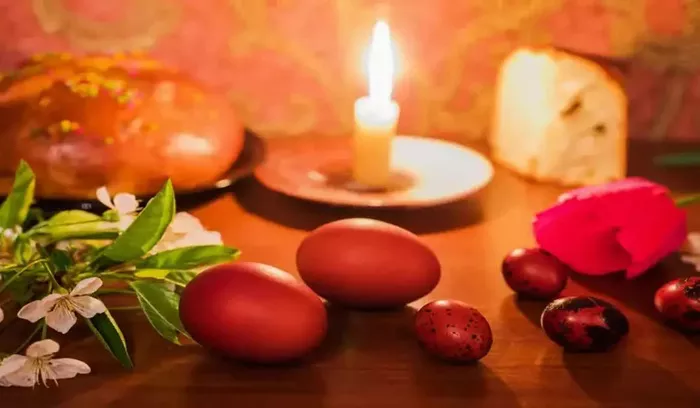
Holy Saturday is a day of anticipation. Many families prepare traditional Easter foods such as lamb, tsoureki (sweet bread), and red-dyed eggs. Churches hold midnight services, celebrating the resurrection of Christ, which culminates in lighting candles and singing hymns.
Greek Easter Sunday Celebrations
Greek Easter Sunday, or Pascha Sunday, is a day of joy and feasting. Families gather for a large meal, typically featuring roasted lamb on a spit, symbolizing the sacrifice of Jesus. The red eggs that were prepared on Holy Saturday are cracked in a traditional game to symbolize the resurrection and new life. Churches are decorated, and communities come together to celebrate with music, dancing, and fireworks in some regions.
Traditional Foods of Greek Easter
Food plays a central role in Greek Easter celebrations. Traditional dishes include:
- Magiritsa: A soup made from lamb offal, eaten after the midnight service on Holy Saturday.
- Tsoureki: Sweet, braided bread flavored with spices and decorated with red eggs.
- Lamb on the Spit: The centerpiece of the Easter Sunday meal, roasted to perfection.
- Kokoretsi: A dish of lamb intestines and herbs, often grilled during Easter celebrations.
Cultural Significance of Pascha
Pascha is not just a religious holiday. It is a time for Greeks to connect with their heritage, family, and community. Traditional dances, songs, and gatherings reinforce social bonds. The holiday also symbolizes hope, renewal, and the triumph of life over death, reflecting the spiritual themes of resurrection and salvation in the Orthodox Christian faith.
Greek Easter Symbols
Several symbols are associated with Greek Easter:
- Red Eggs: Symbolize the blood of Christ and new life.
- Lamb: Represents sacrifice and resurrection.
- Fire and Candles: Symbolize light overcoming darkness, used during midnight services.
- Crosses: Represent faith, sacrifice, and salvation.
Regional Variations
While Pascha is celebrated throughout Greece, local traditions vary. In some islands, fireworks light up the sky at midnight, while in villages, families may hold community feasts. Music and dance are often integral, with different regions having unique songs and rituals.
Modern Celebrations of Greek Easter
Today, Greek Easter combines religious observance with social and cultural festivities. Many Greeks living abroad maintain these traditions, celebrating Pascha with family gatherings, church services, and traditional foods. It remains a major holiday, bridging spiritual meaning with communal joy.
Conclusion
In summary, Greek Easter, known as Pascha, is a celebration of faith, family, and culture. From its roots in Orthodox Christian tradition to its vibrant modern-day practices, Pascha represents resurrection, renewal, and the joy of life. Whether through church services, traditional foods, or communal festivities, Greek Easter remains a cornerstone of Greek cultural identity and religious devotion.
Related topics: