
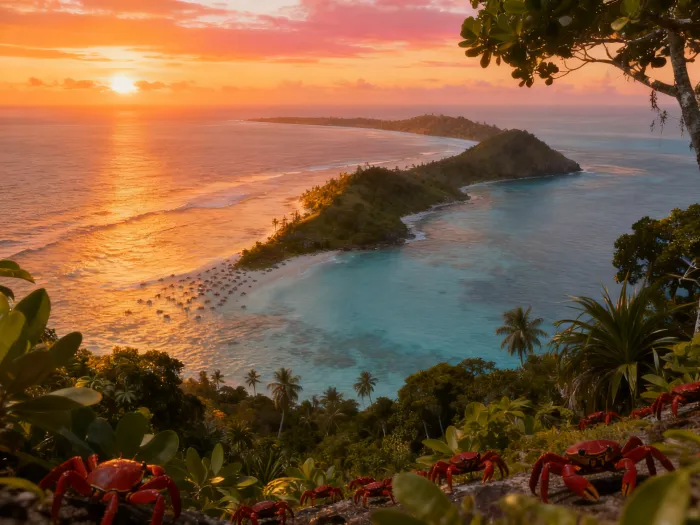
Christmas Island is a remote and unique territory that often sparks curiosity due to its intriguing name and location. Many people wonder where this island is situated, what makes it special, and why it is called Christmas Island. This article provides a detailed introduction to Christmas Island, highlighting its geographical position, historical background, and key features.
Geographical Location
Christmas Island is located in the Indian Ocean. It lies approximately 350 kilometers south of Java, Indonesia. The island is about 1,550 kilometers northwest of the Australian city of Perth. Although it is geographically closer to Asia, Christmas Island is an Australian external territory. The total area of the island is around 135 square kilometers, making it relatively small compared to other territories.
History and Discovery
The island was first sighted on Christmas Day in 1643 by Captain William Mynors of the British East India Company. This event led to its name, Christmas Island. For many years, the island remained largely uninhabited due to its isolated location and rugged terrain. In the late nineteenth century, the discovery of rich phosphate deposits attracted interest and led to settlement and development.
Political Status
Christmas Island has been under Australian administration since 1958. Before this, it was a British territory. Today, it is governed as an external territory of Australia. The island has its own local administration but is subject to Australian law and policies. Its population is small, with residents comprising Australians as well as people from Malaysia and other countries.
Natural Environment
The island boasts a remarkable natural environment with lush rainforests and diverse wildlife. One of its most famous features is the annual migration of red crabs. Millions of crabs move from the forest to the sea each year to breed. This phenomenon attracts scientists and tourists from around the world. Additionally, Christmas Island is home to several endemic species that cannot be found elsewhere.
Culture and Society
Despite its small population, Christmas Island has a vibrant multicultural society. Languages spoken include English, Malay, and various Chinese dialects. The island celebrates several cultural festivals throughout the year, reflecting its diverse heritage. Local customs are influenced by both Asian and Western traditions.
Economy and Infrastructure
The economy of Christmas Island primarily relies on phosphate mining, government services, and tourism. Mining has been a major industry since the late 1800s. The island also has facilities for scientific research due to its unique ecology. Transportation links are limited; there is one airport connecting the island with mainland Australia and occasional shipping services.
Tourism Attractions
Visitors come to Christmas Island for its natural beauty and wildlife experiences. Popular attractions include national parks, pristine beaches, coral reefs for diving, and birdwatching opportunities. The red crab migration remains a highlight for many tourists each year.
Conclusion
Christmas Island’s location in the Indian Ocean gives it a distinct identity as both an Australian territory and a region rich in natural wonders. Its history, culture, and environment make it an intriguing destination for exploration and study.
Related topics: